
AMR and Warehouse Automation
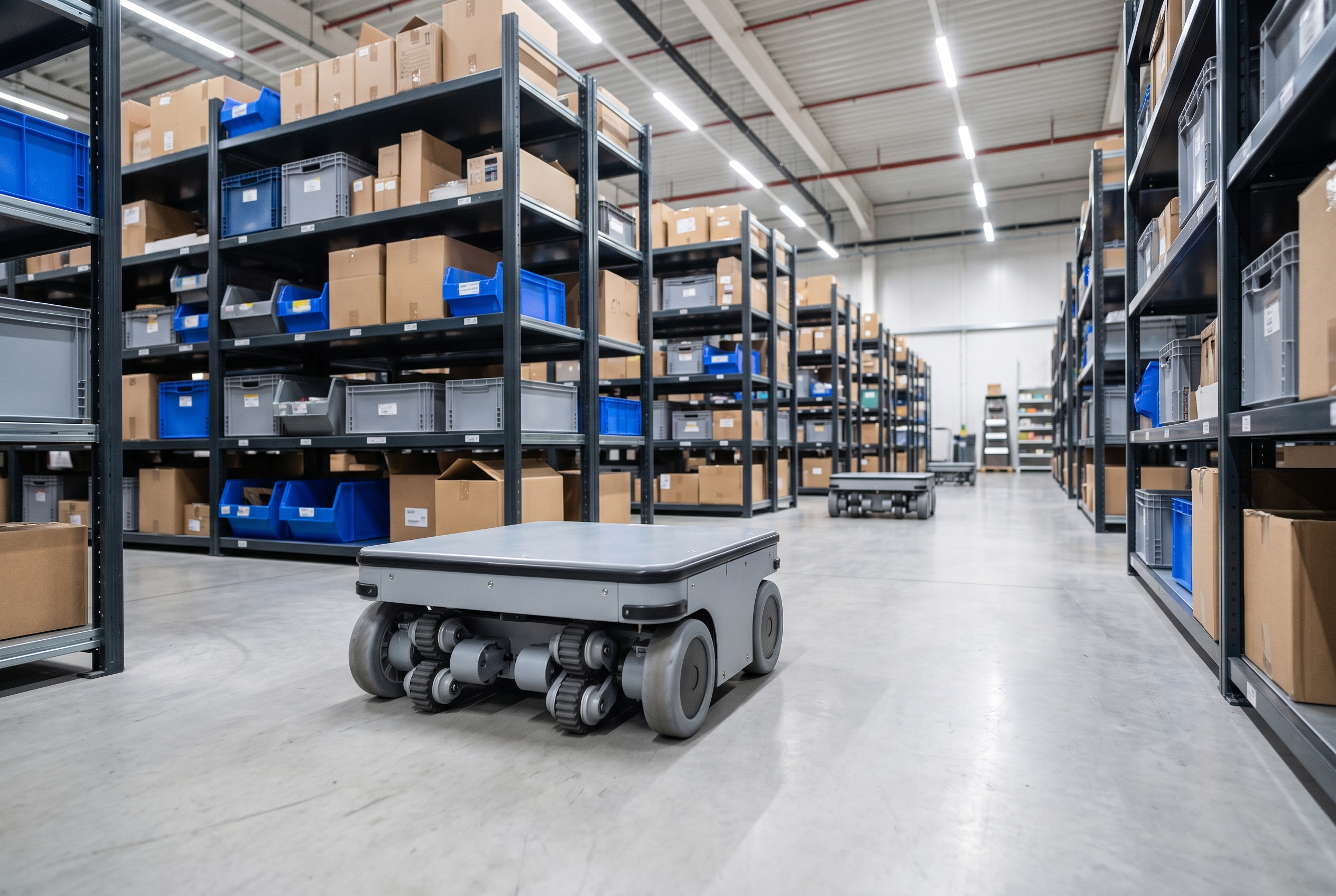
24/7 operations, electrostatic buildup, stringent cleanroom requirements and continuous impact break standard parts. Custom-engineered urethane parts don’t.
— The Recurring Problems
Continuous 24/7 wear
Wheels and rollers flat-spot, deform or wear fast under start-stop load
ESD faults
Electrostatic discharges can damage sensitive electronics
Fast stock-part failure
Off-the-shelf wheels show static buildup and heavy wear in continuous duty
Cleanroom vs wear tradeoff
Most materials give cleanliness or wear life, not both
Impact & shock
Incidental impacts transfer shock into components, causing misalignment and stress
Tight launch timelines
New platforms need a development partner, not a parts catalog
— The Differentiator
Where standard parts fall short in continuous-duty automation
Engineers usually start with off-the-shelf rollers, wheels or bumpers — rubber, plastic, metal or stock urethane — and each falls short somewhere:
- Rubber rollers can't safely dissipate static and lack the wear strength for continuous 24/7 operation
- Thermoplastic and rubber rollers deform, flat-spot, lose dimensional stability and take a compression set under sustained load and start-stop motion
- In cleanrooms, materials that pass particulate testing often wear too fast, and durable ones fail the cleanliness test — no single stock part gives wear life + cleanroom compliance + static control
- Rigid or hard bumpers and stops (thermoplastic or metal) go brittle and transfer shock straight into components
- None can be tuned to the full combination the application needs at once — hardness, wear, traction, conductivity and impact / environmental resistance — and stock suppliers offer no engineering support
The Result – ESD faults, unplanned downtime, frequent maintenance, premature replacement, cleanroom contamination events, missed launch timelines and higher total cost of ownership.
— Solution Spotlights
The custom parts that solve it
High-Load & Conductive Wheels
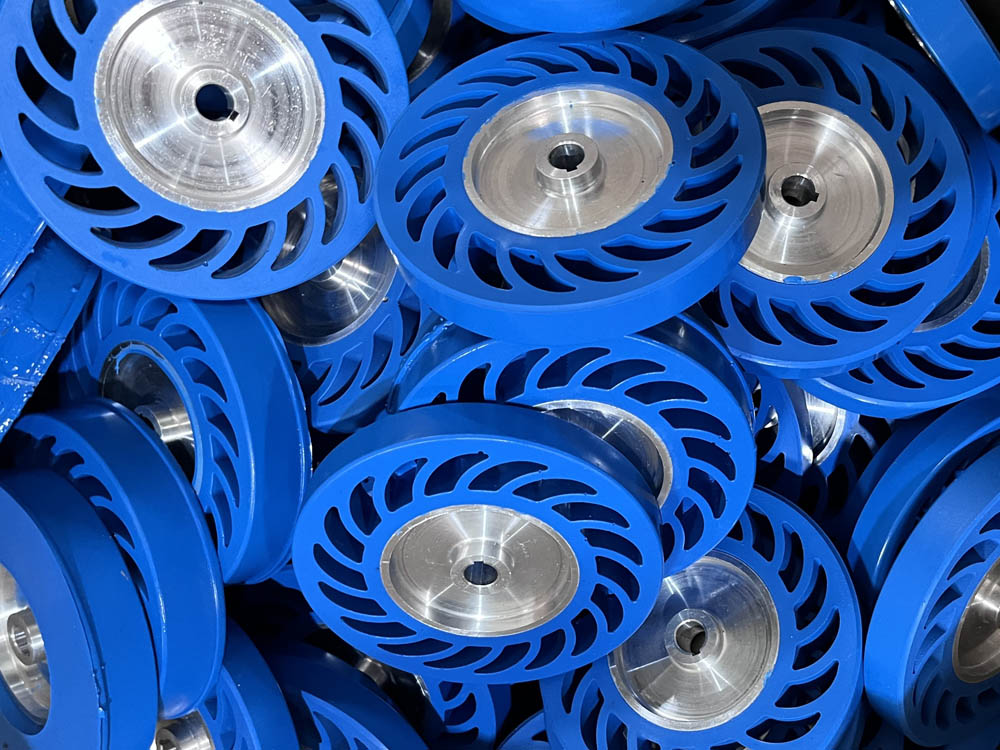
For continuous 24/7 duty under load and start-stop, MPC manufactures wheels tuned for high compressive strength that resist the flat-spotting and compression set that fail rubber and thermoplastic components. Where static can arc through sensors, Durethane® C dissipates charge without shedding, tuned to your ESD target — cleanliness, wear and static control in one part.
High-Load & Conductive Rollers
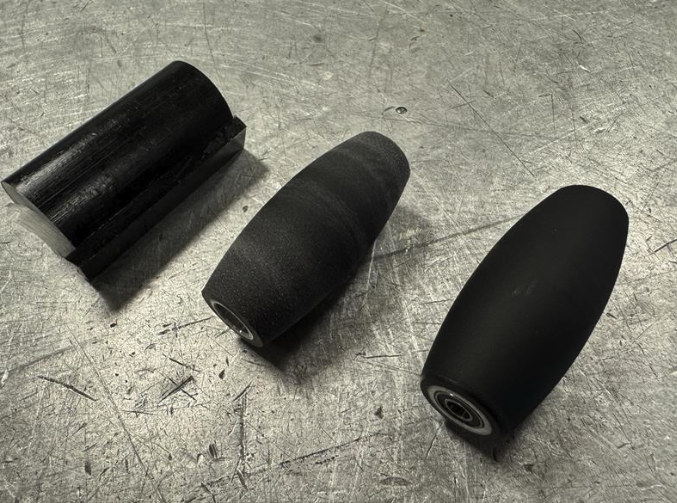
MPC manufactureshigh-load rollers for the same continuous, start-stop duty; in one heavy-duty robotics case a custom roller reduced deformation and extended maintenance intervals. Conductive Durethane® C rollers add static control without shedding, so one roller delivers wear life and ESD control together.
Polyurethane Belts
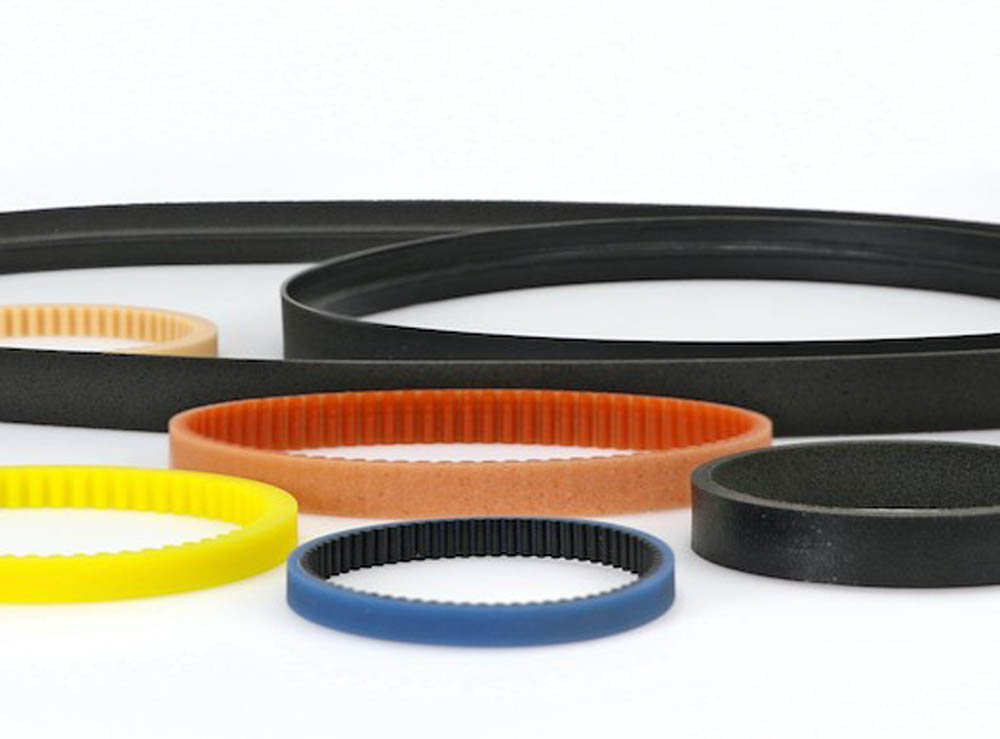
MPC casts custom urethane belts for automation drives and conveyance, tuned to the traction, durometer and wear the line needs, and available in conductive materials where static is a concern.
Bumpers & Impact Protection
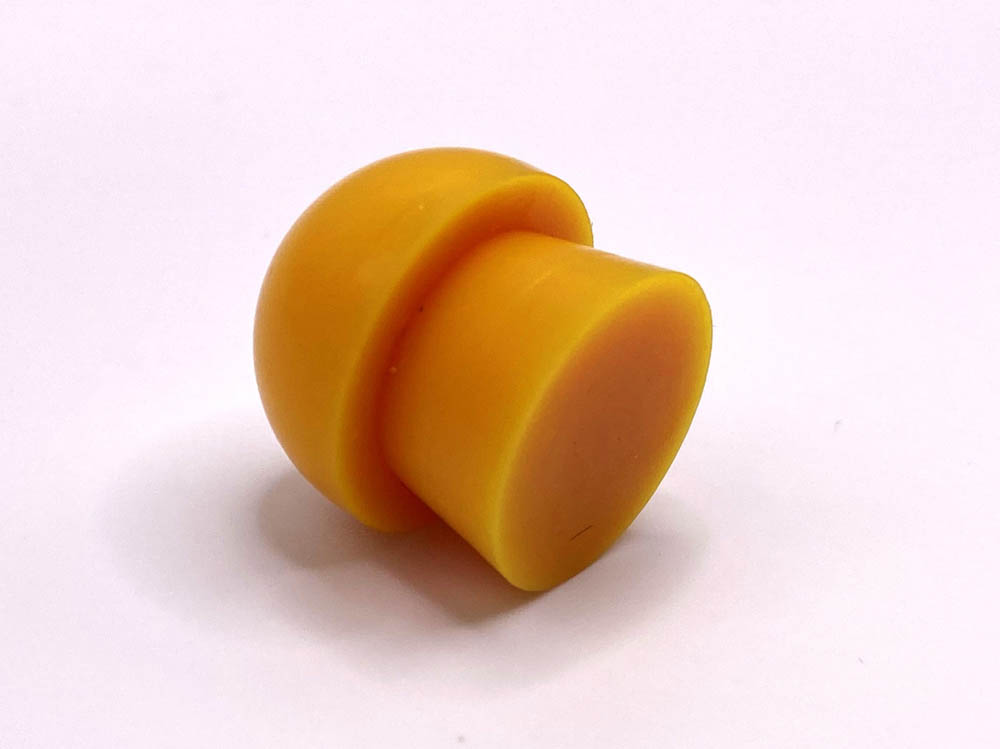
Incidental impacts and hard stops transfer shock into robotic components. MPC manufactures custom bumpers and engineers urethane foam that absorbs impact through controlled compression — cutting peak forces without hurting cycle time.
Seals & Gaskets
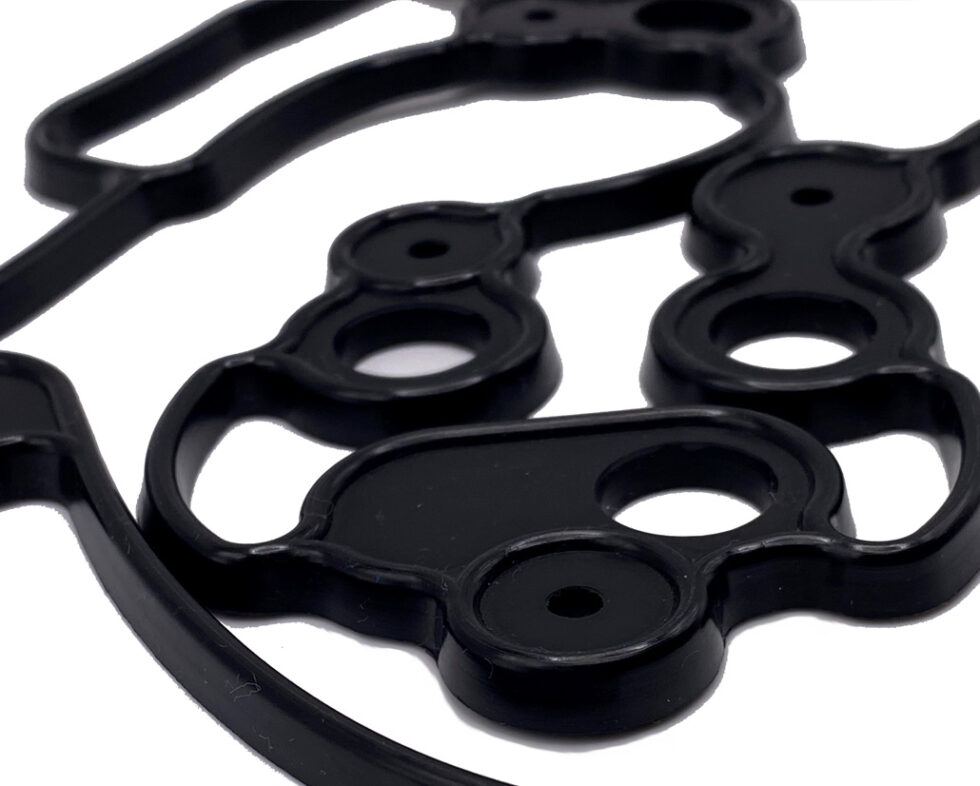
MPC manufactures custom urethane seals and gaskets for automation equipment, tuned to the durometer, wear and environmental resistance each interface needs, where stock elastomer seals can’t be customized to the application’s needs.

Talk it through with a polyurethane expert who’ll tell you what’s achievable and what is not.
— Technical Specifications
The specs that matter for continuous AMR and automation duty
Property
Range for this application
Hardness (Durometer)— solid polyurethane
ASTM D2240
- Full formulating range: Shore 20A–70D
- Shore 80A–70D is the typical band for load-bearing wheels and rollers
- Conductive grades are available across the same 20A–70D span
Hardness (Durometer) — foam polyurethane
ASTM D2240
- Shore 25A–50A for cast polyurethane foam for shock and impact absorption
- Shore 20A–45A for soft solid grades where a non-cellular structure is required
Mechanical properties, solid polyurethanes
- Tensile strength 250–7,800 PSI (5,000–7,800 PSI in the 70A–70D band)
- Tear strength, Die C 30–800 PLI (250–800 PLI in the 70A–70D band)
- Elongation 160–850% (220–800% in the 70A–70D band)
Mechanical properties, foam polyurethane
- Tensile strength 800–1,400 PSI
- Tear strength, Die C 100–160 PLI
- Elongation 330–700%
Compression set, resistance to taking a permanent flat
- 5–40% across solid polyurethanes; 30–40% at the hard end (80A–70D)
- 17–20% in heat- and hydrolysis-resistant polycarbonate-based formulations at Shore 70A–90A
Volume resistivity (conductive Durethane® C)
- Conductive formulating range approximately 105–1011 Ω-cm
- Typical at ambient, by durometer: 5×10⁵ (10A–55A) · 5×10⁶ (65A–75A) · 5×10⁷ (85A) · 5×10⁸ (90A–60D) · 5×10⁹ (70D)
- Full published span across conductive and non-conductive grades: 5×10⁵–7×10¹⁵ Ω-cm
Abrasion and surface finish
High abrasion resistance with tolerance to tight surface finishes
Relevant technical downloads
Document
What it gives the engineer
Solid polyurethane material specifications: hardness 20A–70D with tensile, elongation, tear and compression set.
Conductive polyurethane material specifications, including volume resistivity ranges for ESD-controlled wheels, rollers and belts.
Foam polyurethane material specifications for bumpers, cushions and impact absorption.
Polycarbonate polyurethane material specifications for heavy-duty continuous operation applications.
Why MPC’s patented metal-salt conductive technology provides stable conductivity as the part wears, with resistivity values by durometer.
— HOW TO WORK WITH US
From concept to scaled production
Connect With Us
Share your application, performance needs, or a part you want to improve.
Collaborate on Design
Our engineers will help optimize materials and geometry for manufacturability.
Prototype & Refine
We produce samples using our proprietary polyurethane formulations for testing.
Move to Production
Once approved, we move to scalable molding with full quality assurance.
That’s exactly the conversation we like to have – get a polyurethane expert on a quick call to pressure-test your idea before you commit.
— Proof
Case studies & white papers
Case Studies
Warehouse Automation OEM Cuts ESD Faults 70%
A warehouse automation OEM was losing uptime to static discharge and roller wear in its AMRs. This case study shows how MPC engineered a conductive roller that reduced ESD faults by roughly 70% and delivered 2.5× the roller life—reliable enough to standardize across the whole platform.
Robotics OEM Doubles Roller Life, Boosts Uptime
A continuous-duty robotics manufacturer kept losing rollers to flat-spotting under constant load and start-stop motion. This case study shows how MPC’s custom cast roller eliminated the flat spots and delivered about 2× the service life, cutting the unplanned maintenance that was slowing the line.
Automation OEM Launches Cleanroom Robotics On Schedule
An automation OEM needed cleanroom-rated wheels that were also tough enough to last. This case study shows how MPC developed a custom conductive wheel that met the ISO cleanliness requirements with extended wear life and validated the part in time to keep the customer’s launch on schedule.
Robotics OEM Overcomes Material Performance Limitations
A robotics OEM needed a molded part that balanced controlled stiffness, predictable wear, and environmental resistance, something no off-the-shelf material could hit. This case study shows how MPC tuned durometer, additives, and chemistry to deliver it and cut the costly redesign cycles along the way.
Automation Manufacturer Reduces Robotic Impact Damage
An automation manufacturer kept seeing damage as its robotic system absorbed repeated impacts through rigid stops. This case study shows how MPC’s custom-engineered urethane foam soaked up the shock through controlled compression, reducing impact damage without slowing the system.
Robotics OEM Extends Roller Life Under Heavy Loads
A robotics OEM was losing rollers prematurely under heavy, continuous loads. This case study shows how MPC’s high-load cast roller stood up to the punishment and extended service life, cutting the premature failures that were driving downtime.
White Papers
Engineering Urethane Wheels and Rollers for Robotics and Automation
Wheels and rollers are among the hardest-working parts in any automated system. This white paper walks engineers through designing them for load, wear, traction, and reliability in high-duty robotics, so they last instead of becoming the weak link.
Custom Polyurethane Formulations in Robotics
When off-the-shelf materials can’t hit every requirement at once, robotics engineers turn to custom formulation. This white paper explains how MPC customizes durometer, additives, and chemistry to resolve the competing demands of wear, stiffness, and environmental resistance in robotic systems.
Designing Robotic Systems for Shock, Vibration, and Impact
As robots move faster, shock and vibration – not just static strength – drive many failures. This white paper shows engineers how to improve reliability by managing impact energy across the whole system rather than simply building parts stronger.
Engineering Polyurethane Components for High-Duty Applications
Modern automation pushes mechanical parts past what standard materials can handle. This white paper covers the material, process, and design choices behind heavy-duty polyurethane components for robotics and precision systems, so they hold up under continuous duty.
— Design Guide
How to specify custom urethane components for AMRs and automation
— FAQ
Frequently Asked Questions
How do I stop ESD / static discharge from damaging sensors and electronics in my AMRs?
Use conductive urethane wheels, rollers or belts. Durethane® C is a metal-salt conductive material that handles static without shedding particles, customized to your volume resistivity target across roughly 10⁵–10¹⁵ Ωcm — so charge dissipates instead of damaging sensitive electronics.
Why do my robot / AMR wheels and rollers wear out or flat-spot so fast under continuous duty?
Because standard thermoplastic and rubber materials deform and take a set under load and start-stop. A custom cast polyurethane wheel is tuned for compressive strength and wear resistance, so it resists flat-spotting and holds its dimensions through continuous 24/7 performance.
Can I get cleanroom / ISO-compliant wheels and rollers that still hold up to wear?
Yes — in one part. MPC develops custom urethane wheels that are non-particulating and wear-resistant at once, where most materials give only one. MPC works to the cleanliness you must qualify to and engineers the material to meet it.
What makes custom cast polyurethane better than off-the-shelf rubber, plastic or metal for automation parts?
Cast urethane can be tuned to the full combination of properties an automation part needs to succeed — hardness, wear, coefficient of friction, conductivity and impact resistance — where rubber, plastic or metal each miss at least one. MPC supports you from material selection through prototype to scale-up.
Can urethane bumpers protect robotic components from impact without slowing the line?
Yes. MPC engineers urethane bumpers and foam polyurethanes that absorb impact energy through controlled compression, slowing impacts rather than stopping motion abruptly — cutting peak forces and component stress without hurting cycle time.
— Keep Exploring