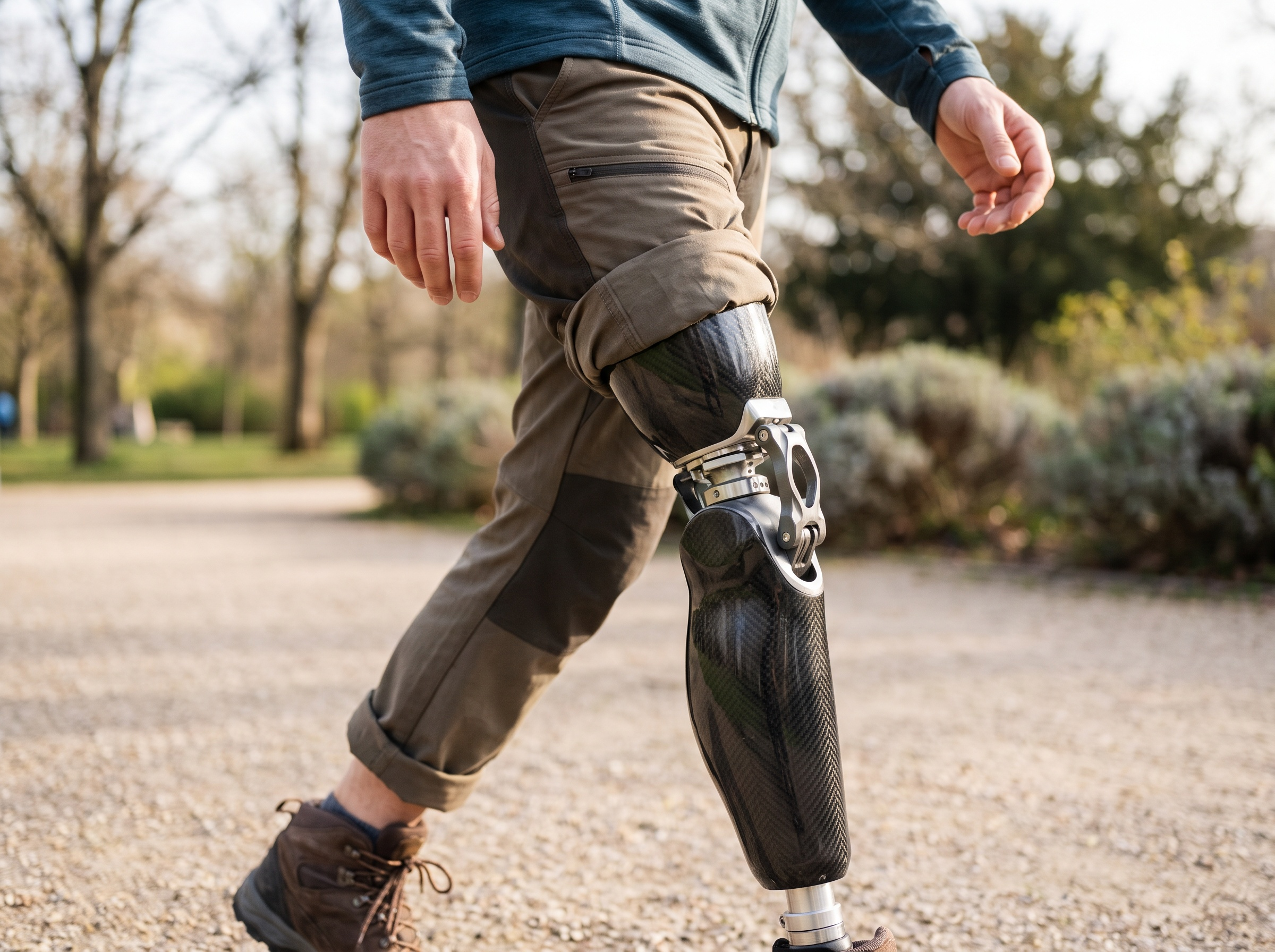
Joints cycle daily under body load, and the wear surface must keep working
Play & noise from wear
A worn part develops play and noise, and shortens device life
Optimum performance
Component materials need to meet complex requirements, such as high hardness and load capacity with quiet, low-friction motion
Bonding to hardware
Components often need the elastomer material to bond reliably to metal or composite joint hardware
Patient-adjacent surfaces
Outer-contact parts need a durable material
— The Differentiator
Where standard materials fall short in prosthetic applications
Engineers usually reach for metal or plastic in prosthetics — and each falls short somewhere:
Metal parts are clunky, can run noisy, and can rust and wear over time
Machined and injection-molded plastics wear under constant articulation — the prosthetic develops play, noise and loses smooth motion
Rubber components may take a set, and wear quickly under constant use
None can be customized to the combination of hardness, wear life and other physical properties the prosthetic needs, and stock suppliers offer no engineering support
The Result – Prosthetic play, noise, reduced performance, earlier service or replacement of a high-value custom device, and user dissatisfaction.
— Solution Spotlights
The custom parts that solve it
Bushings & Wear Surfaces
MPC manufactures the bushings and wear surfaces inside the joint — not the metal bearing itself — with abrasion resistance well beyond rubber and plastics, so the joint can continue to perform under constant use. Our polyurethane materials can be bonded to metal during the manufacturing process, minimizing downtime and extending product life. Our custom components are designed to meet the exact requirements of your application, customized to your prosthetic specifications.
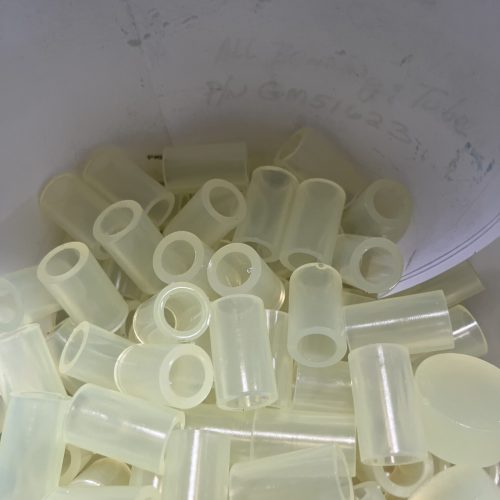
The smallest prosthetic parts — foot pads and small bushings — are made using MPC’s micro-molding process. They use the same abrasion resistant materials available across our product offerings. Geometry and material properties can be customized to each part, which can help your prosthetic systems hold up to daily use.
Choosing Thermoset Polyurethane for Medical Device Design
Medical device designers weigh polyurethane against metal and plastic without much to compare them on. This white paper sets thermoset polyurethane beside both — on flexibility, customizability, molding options and biocompatibility — and walks through a mobile imaging case where a custom cast bumper stopped a retracting cord from damaging the machine.
What wear-surface material resists wear in a prosthetic that cycles daily under load?
Cast polyurethane. Its abrasion and wear resistance is exceptional, well beyond rubber, plastics, and metals, so the wear surface keeps working through years of daily use. MPC customizes the material properties to meet the exact needs of your system.
How do I keep a prosthetic joint from developing play and noise as the wear surface wears?
Use a wear surface that resists abrasion and holds its shape. Cast polyurethane has high abrasion resistance, tear strength, and low compression set, so it doesn’t wear into play or take a set like rubber and some plastics — keeping the joint quiet and tight.
Can I get a high-hardness, heavy-load wear surface that still articulates smoothly and quietly?
Yes. MPC can customize material hardness about Shore 20A to Shore 70D, so you can choose the right material for your application. For the most demanding uses, our proprietary polycarbonate polyurethane materials Durethane® XL, add extreme durability and high-temperature, high-humidity resistance.
Can the elastomer be bonded to the metal prosthetic hardware?
Yes. MPC chemically bonds the polyurethane to metal during manufacturing — a bond stronger than the polyurethane itself — so it won’t debond under load and constant use.
Is a durable material available for patient-adjacent (outer-contact) prosthetic components?
Yes. For outer-contact surfaces MPC can customize materials that meet the durability and performance that your prosthetic system requires.