
Corrugate and Paper Processing
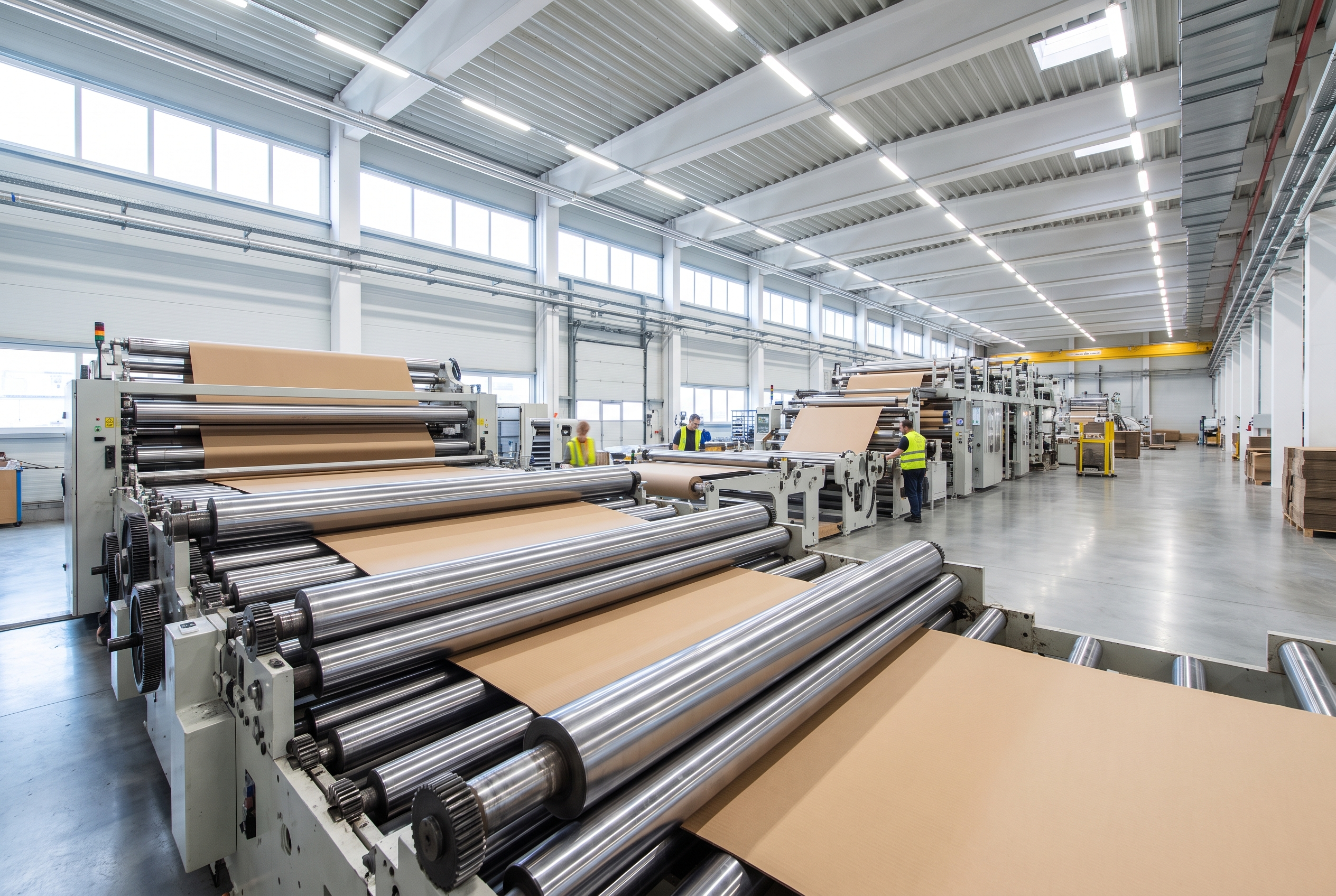
Abrasive, dusty, static-prone, heavy-duty corrugate applications wear out standard parts. Custom-engineered polyurethane components hold up.
— The Recurring Problems
Abrasive wear
Rubber feed rollers lose grip and diameter against abrasive board and dust.
Static & dust
Corrugate handling builds static that attracts dust and causes cling and misfeeds
Carbon-filler shedding
Carbon-filled rollers lose conductivity and shed particles as they wear.
Backing-roll vibration
Backing rollers must dampen feed-roll vibration to keep sheets tracking.
Continuous high throughput
Rollers must hold up build after build without frequent replacement.
No stock fit
Catalog rollers can’t be customized for durometer, conductivity and wear life.
— The Differentiator
Where standard rollers fall short in a corrugated plant
Engineers reach for standard rubber feed / pull rollers, or carbon-filled “anti-static” rollers where static is a problem — and each falls short somewhere:
- Rubber feed rollers lack abrasion life under sustained duty against abrasive corrugate and paper — they wear fast, lose grip and diameter, causing misfeeds
- Rubber generates and holds static and can mark; insulating rollers let static build on the web — leading to dust attraction, sheet cling, misfeeds and unwanted static discharge
- Carbon-black / carbon-filled conductive rollers need high filler loading, can lose conductivity over life and shed conductive particles as they abrade
- Catalog rollers can't be customized to the durometer, conductivity and wear life the line needs, and stock suppliers offer no engineering support
The Result – Frequent roller replacement and downtime on continuous lines, misfeeds and jams, dust- and static-related quality and housekeeping problems, and ESD / ignition risk in a dusty environment.
— Solution Spotlights
The custom parts that solve it
Feed, Pull, Backing & Conductive Rollers
Feed and pull rollers grip board through the nip while abrasive media wears the surface; MPC manufactures custom urethane on precision-ground metal cores for improved abrasion resistance than rubber, and provides backing rollers to dampen vibration. Where board builds static, Durethane® C keeps consistent conductivity over the roller’s life.
Polyurethane Belts
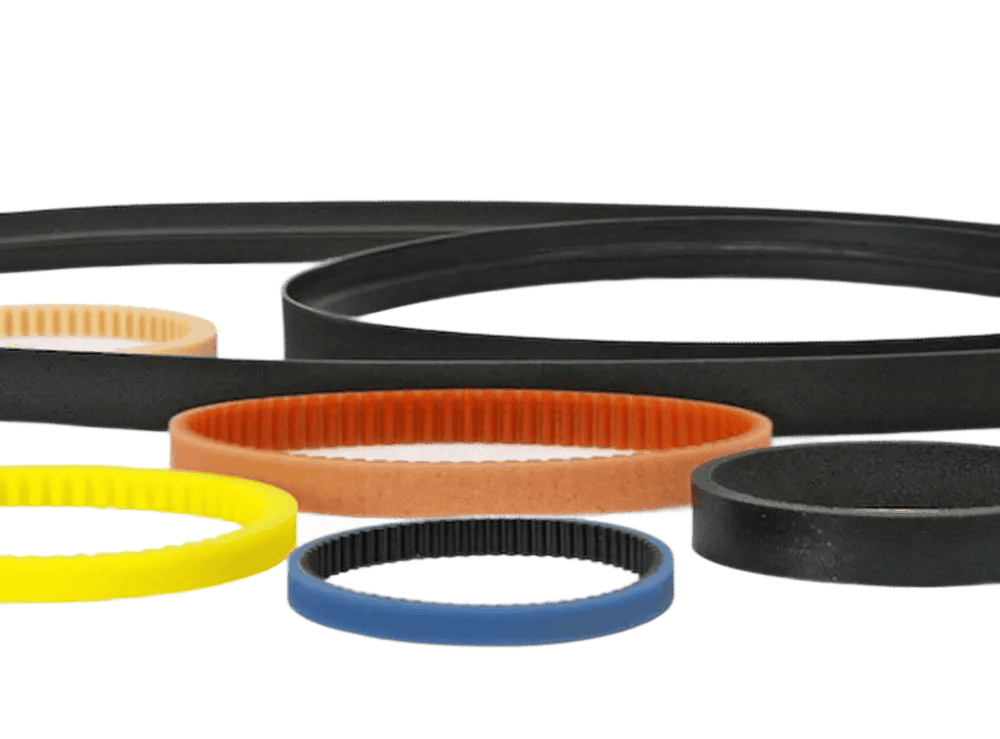
MPC casts custom urethane belts for the feed and converting sections — customized coefficient of friction , durometer and wear resistance, and available in conductive materials where static is a concern — to outperform the rubber belts they replace.

Talk it through with a polyurethane expert who’ll tell you what’s achievable and what is not.
— Technical Specifications
The specs that matter for corrugating and paper converting duty
Property
Range for this application
Hardness
ASTM D2240
- Conductive feed roller ≈ Shore 30A-60A
- Full formulating range: Shore 20A–70D across the solid and conductive materials
Volume resistivity (Durethane® C)
- Conductive formulating range approximately 105–1011 Ω-cm
- Typical at ambient, by durometer: 5×10⁵ (10A–55A) · 5×10⁶ (65A–75A) · 5×10⁷ (85A) · 5×10⁸ (90A–60D) · 5×10⁹ (70D)
- Full published span across conductive and non-conductive grades: 5×10⁵–7×10¹⁵ Ω-cm
Abrasion and surface finish
High abrasion resistance with tolerance to tight surface finishes
Chemical exposure
Thermoset polyurethane resists a wide range of chemicals and oils. See the chemical resistance table for the general guideline by substance
Relevant technical downloads
Document
What it gives the engineer
Technical data for Durethane® C conductive polyurethanes including volume resistivity range and other key material properties.
In-depth overview of MPC’s conductive polyurethane technology, which provides stable volume resistivity as parts wear.
Technical data for Durethane® S solid polyurethanes including key material properties.
General chemical resistance guideline for MPC’s thermoset polyurethanes.
— HOW TO WORK WITH US
From concept to scaled production
Connect With Us
Share your application, performance needs, or a part you want to improve.
Collaborate on Design
Our engineers will help optimize materials and geometry for manufacturability.
Prototype & Refine
We produce samples using our proprietary polyurethane formulations for testing.
Move to Production
Once approved, we move to scalable molding with full quality assurance.
That’s exactly the conversation we like to have – get a polyurethane expert on a quick call to pressure-test your idea before you commit.
— Proof
Case studies & white papers
White Papers
Engineering Polyurethane Components for Heavy-Duty Applications
Modern automation pushes mechanical parts past what standard materials can handle. This white paper covers the material, process, and design choices behind high-duty polyurethane components for heavy-duty precision systems, so they hold up under continuous operation.
Engineering Urethane Wheels and Rollers for Robotics and Automation
Wheels and rollers are among the hardest-working parts in any automated system. This white paper walks engineers through designing them for load, wear, traction, and reliability in heavy-duty robotics.
— Design Guide
How to spec custom urethane rollers for corrugate and paper
— FAQ
Frequently Asked Questions
What feed / pull roller material outlasts rubber against abrasive corrugated board and paper at high speed?
Custom cast polyurethane. It has far better abrasion resistance than rubber against corrugate and paper, so it holds grip and diameter at high speed instead of wearing fast and misfeeding. MPC precision-grinds the surface and tunes the durometer to the media.
How do I dissipate static on fast-moving board and paper without a roller that sheds conductive particles into a dusty plant?
Durethane® C conductive polyurethane. Its conductivity comes from our patented metal salts technology, not carbon particles, so it dissipates static without shedding filler — and doesn’t lose conductivity as it wears like carbon-filled rollers.
Can I get a conductive roller with volume resistivity that remains stable through the whole part and over its wear life — not just a surface coating?
Yes. Durethane® C is conductive throughout, not just the surface — the metal salt technology provides homogeneous volume resistivity throughout the polymer, so conductivity remains stable (customizable between ~10⁵–10¹¹ Ωcm).
Can backing rollers dampen feed-roll vibration to keep sheets tracking at high sheet rates?
Yes. MPC manufactures backing rollers in a durometer and construction customized to absorb feed-roll vibration, so sheets keep tracking at hundreds of sheets per minute. Our custom components are designed to meet the exact requirements of your application..
Can you recover / recoat our existing metal cores with a longer-life cast urethane?
Yes. MPC recovers and recoats existing metal roller cores with a longer-life cast urethane, so you can reuse the hardware you already have instead of buying complete new rollers.
— Keep Exploring