
Industrial Printing & Labeling
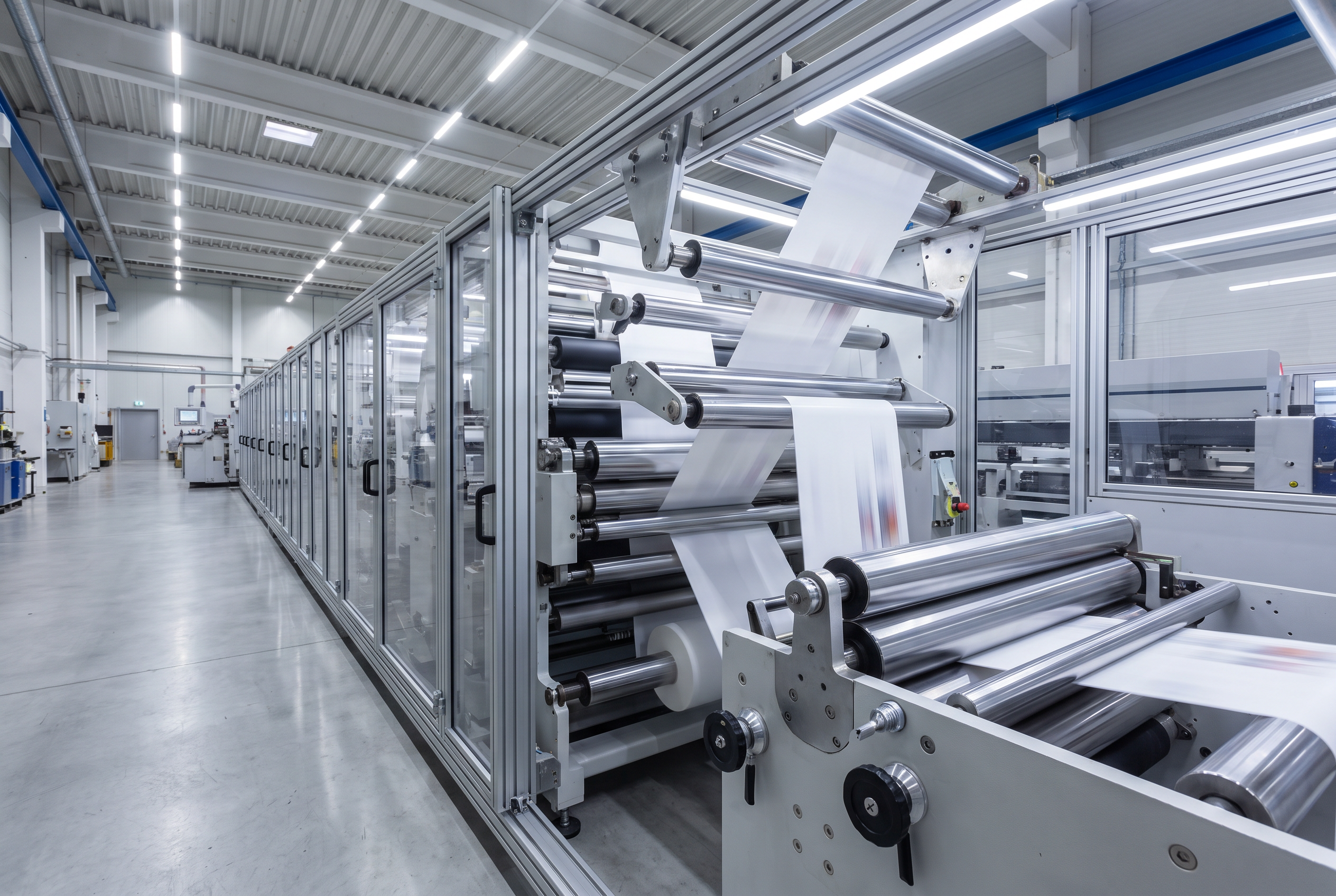
High-speed media handling, wear, chemicals and static build-up can damage standard rollers. Custom-engineered polyurethane rollers keep your systems moving.
— The Recurring Problems
Coefficient of friction must stay consistent
Rollers must feed paper and media at speed without slipping or skewing.
Rubber glazes and drifts
Rubber wears unevenly and has a tendency to glaze, so grip and registration drift.
Abrasive high-throughput wear
Continuous operation can abrade component surfaces, driving changeovers, downtime and scrap.
Chemical attack
Inks, solvents, UV and wash-up chemicals swell and degrade standard materials.
Static on the web
Static buildup on fast webs causes cling, misfeeds, dust pickup and unwanted static discharges.
— The Differentiator
Where standard rollers fall short in the media path
Engineers start with standard rubber rollers or catalog urethane — and each falls short somewhere on a high-speed line:
- Rubber rollers can wear unevenly, glaze and lose grip under continuous high-speed contact — coefficient of friction drifts and feed & registration degrades
- As rubber wears, roller diameter changes — throwing off registration on tight-tolerance presses and label applicators
- Standard materials swell, harden or degrade when exposed to inks, solvents, UV and wash-up chemicals
- Insulating rubber and standard urethane can't dissipate static buildup on fast webs — cling, misfeeds, dust pickup and static discharge
- Stock suppliers offer no engineering support to customize the physical properties needed to meet complex specifications — coefficient of friction, abrasion resistance, compression set, electrical conductivity, dimensional tolerance, and chemical resistance
The Result – Misfeeds, jams, registration errors, web breaks, scrap and reprints; more frequent roller changeovers and unplanned downtime on revenue-generating lines; inconsistent print and label quality and end-customer complaints; and higher total cost of ownership
— Solution Spotlights
The custom parts that solve it
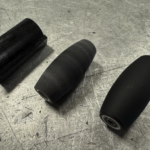
Feed, Pinch, Nip & Transport Rollers
Feed, pinch, nip and transport rollers must grip paper and media at speed and hold registration; MPC manufactures them in custom urethane with the coefficient of friction tuned to your media and a precision-ground finish. Our patented conductive urethane materials(Durethane® C) add static buildup control, and our durable polycarbonate polyurethane materials (Durethane® XL) resists inks, solvents and wash-up chemicals that swell standard materials.
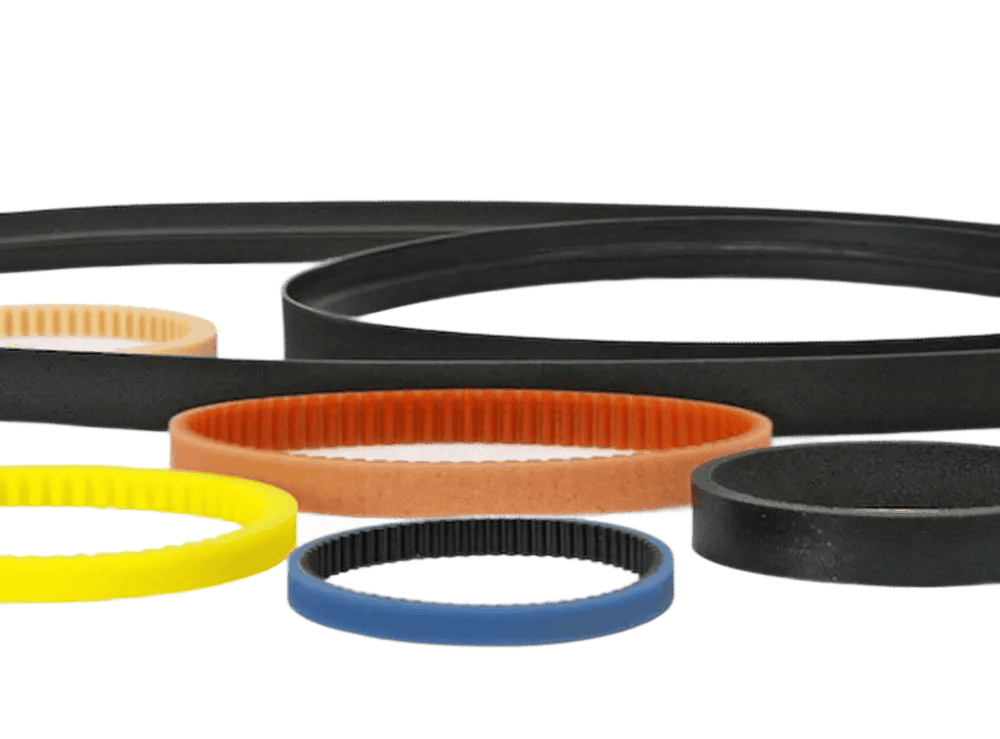
Polyurethane Belts
MPC manufactures custom urethane belts for the drive and media path, including multi-layer belts with the coefficient of friction tuned to the media. In one document-handling application a custom multi-layer belt virtually ended the misfeeds worn rubber belts were causing.

Talk it through with a polyurethane expert who’ll tell you what’s achievable and what is not.
— Technical Specifications
The specs that matter for industrial printing & labeling
Property
Range for this application
Hardness
ASTM D2240
- Shore 20A–70D
- Shore 70A–90A for Durethane® XL polycarbonate polyurethane materials
Coefficient of friction
Customized to the media and held consistent unit to unit
Volume resistivity (Durethane® C)
- Volume resistivity range approximately 105–1011 Ω-cm
- Typical at ambient, by durometer: 5×10⁵ (10A–55A) · 5×10⁶ (65A–75A) · 5×10⁷ (85A) · 5×10⁸ (90A–60D) · 5×10⁹ (70D)
- Full published span across conductive and non-conductive materials: 5×10⁵–7×10¹⁵ Ω-cm
Polycarbonate polyurethane (Durethane® XL)
- Shore 70A–90A
- Tensile strength 3,000–5,000 PSI
- Tear strength, Die C 225–375 PLI
- Compression set 17–20%
- Can be made conductive using the same metal-salt technology
Mechanical properties (Durethane® S)
ASTM D412 · ASTM D624 Die C · ASTM D395B at 158°F for 22 hrs
- Tensile strength 250–7,800 PSI
- Tear strength, Die C 30–800 PLI
- Elongation 160–850%
- Compression set 5–40%
Chemical exposure
Thermoset polyurethane resists a wide range of chemicals and oils. See the chemical resistance table for the general guideline by substance
Relevant technical downloads
Document
What it gives the engineer
Hardness 20A–70D with tensile, elongation, tear and compression set per material.
Conductive material volume resistivity range for static dissipation for media handling.
The heat, aging and hydrolysis-resistant materials for toughest operating conditions.
MPC’s patented metal salt conductivity technology remains stable as the roller wears.
General chemical resistance guideline for thermoset polyurethanes.
— HOW TO WORK WITH US
From concept to scaled production
Connect With Us
Share your application, performance needs, or a part you want to improve.
Collaborate on Design
Our engineers will help optimize materials and geometry for manufacturability.
Prototype & Refine
We produce samples using our proprietary polyurethane formulations for testing.
Move to Production
Once approved, we move to scalable molding with full quality assurance.
That’s exactly the conversation we like to have – get a polyurethane expert on a quick call to pressure-test your idea before you commit.
— Proof
Case studies & white papers
White Papers
Custom Urethane Coefficient of Friction for Reliable Document Handling
Cash machines and kiosks jam when worn rubber feed belts lose their grip on the media. This white paper shows how MPC engineered a multi-layer urethane belt with the coefficient of friction customized to the media, virtually eliminating the misfeeds that drive costly field failures.
Engineering Urethane Wheels and Rollers for Robotics and Automation
Wheels and rollers are among the hardest-working parts in any automated system. This white paper walks engineers through designing them for load, wear, traction, and reliability in heavy-duty robotics, so they last instead of becoming the weak link.
Engineering Polyurethane Components for Heavy-Duty Applications
Modern automation pushes mechanical parts past what standard materials can handle. This white paper covers the material, process, and design choices behind heavy-duty polyurethane components for robotics and precision systems, so they hold up under continuous duty.
— Design Guide
How to specify custom urethane rollers for high-speed printing and labeling
Articles & comparisons
— FAQ
Frequently Asked Questions
How do I keep feed / pinch rollers from slipping or misfeeding paper, film and label stock at high speed?
Use a cast urethane roller with the coefficient of friction customized to your application. MPC custom formulates the material and surface finish so coefficient of friction stays consistent run after run, where rubber glazes and loses traction — feeding stock without slip or misfeed at speed.
Why do my rubber printing rollers glaze, wear unevenly and lose registration — and what lasts longer?
Rubber glazes and wears unevenly under continuous high-speed contact, so its grip drifts and its diameter changes, throwing off media registration. Cast urethane resists that abrasion and holds its diameter and grip far longer, so feed and registration stay in spec.
Can I get rollers with a custom, consistent coefficient of friction for my specific media?
Yes. MPC customizes the urethane formulation and surface finish to the coefficient of friction your media needs — so grip is repeatable, not something that varies over part life.
Can polyurethane rollers dissipate static to stop sheet cling, dust pickup and misfeeds on fast webs?
Yes. Durethane® C is MPC’s patented conductive urethane technology with stable, volume resistivity (~10⁵–10¹¹ Ωcm) held throughout the whole part and over its life, so it can manage static buildup and prevent cling, dust pickup and misfeeds — without shedding particles.
Can MPC hold tight, repeatable dimensional tolerances and surface finish for complex printing and labeling applications?
Yes. MPC molds and precision-grinds rollers to a tight dimensional tolerances and surface finish across, so performance is consistent unit-to-unit.
— Keep Exploring