
Military and Defense
Temperature extremes, shock, abrasion, chemicals and vibration break standard parts. Custom-engineered polyurethane components prevail.
— The Recurring Problems
Harsh service
Heat, cold, moisture, corrosives, abrasion, impact and vibration wear standard materials
Custom by necessity
Mission-critical components must perform to the requirements of the system, without compromise
Field maintenance
Parts that need frequent replacement raise cost and downtime
Made in the USA
Programs need a USA-based supplier that can prototype fast, then efficiently scale to production volumes
Low-to-moderate volumes
Volume requirements of defense systems don’t fit most high-volume manufacturers
Failure is not an option
Reliability is mission-critical on land, sea and air platforms
— The Differentiator
Where standard parts fall short on a defense platform
Engineers start with standard rubber, metal or plastic — often catalog parts — and each falls short somewhere in the field:
- Rubber and plastics wear, tear and degrade under abrasion, chemicals and temperature extremes
- Metal corrodes, adds weight and needs lubrication
- Lubricated parts attract contamination and fail when grease breaks down or can't be maintained in the field
- Catalog suppliers can't develop a custom formulation, or support low-volume prototyping through to scaled production
- Off-shore supply is a compliance and continuity risk on defense programs
- None can be customized to the hardness, geometry and performance a platform's specification requires, and stock suppliers offer no engineering support
The Result – Field failures, higher maintenance and total cost of ownership, program delays, and supply risk on systems where a worn part can take a platform out of service.
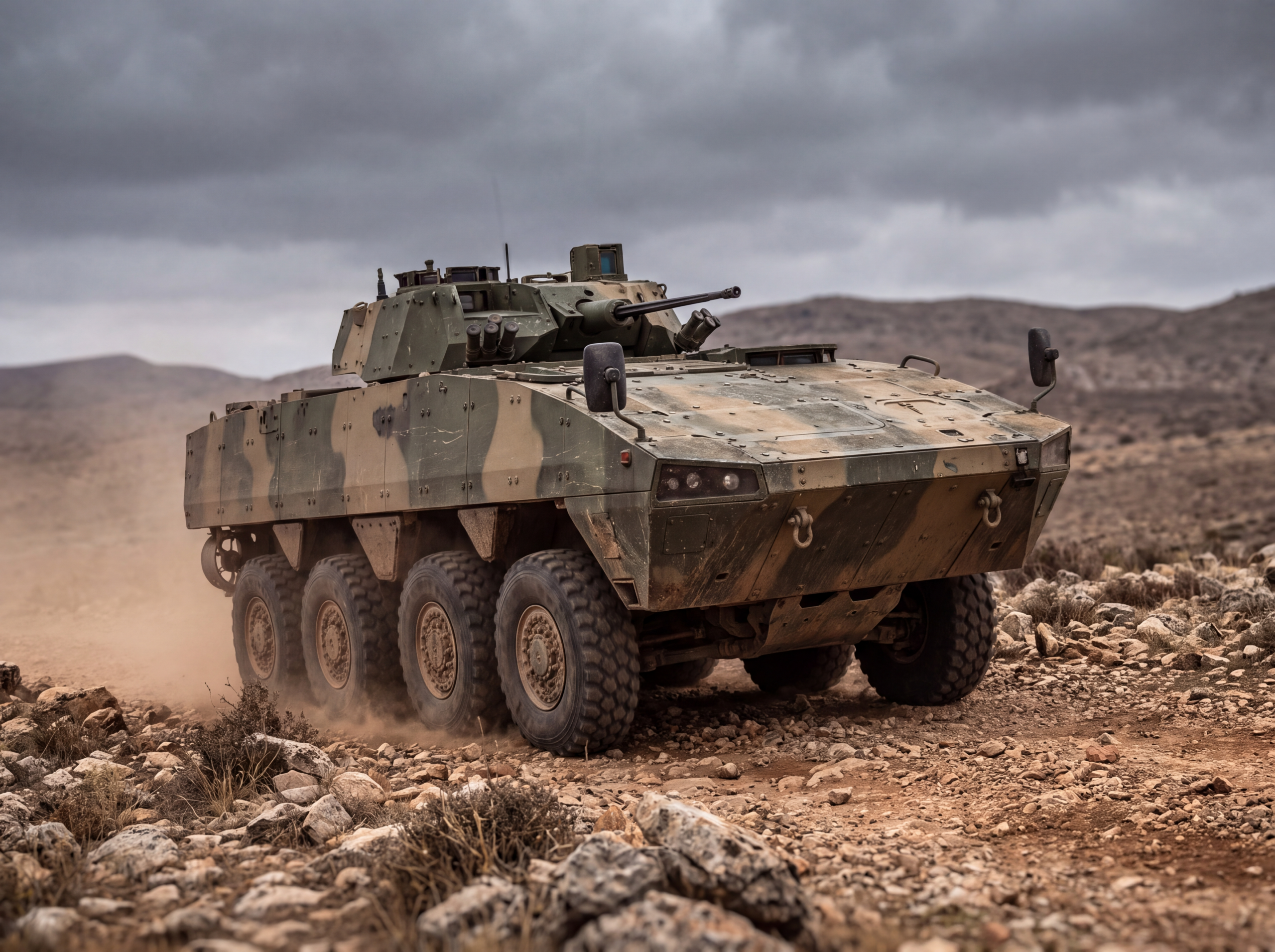
— Solution Spotlights
The custom parts that solve it
Impact, Shock & Vibration — Custom Foam, Bumpers & Mounts
Shock and vibration are specific to each platform, so a stock material doesn’t always work. MPC formulates polyurethane foam, bumpers and mounts to the actual impact, shock and vibration requirements of the system.
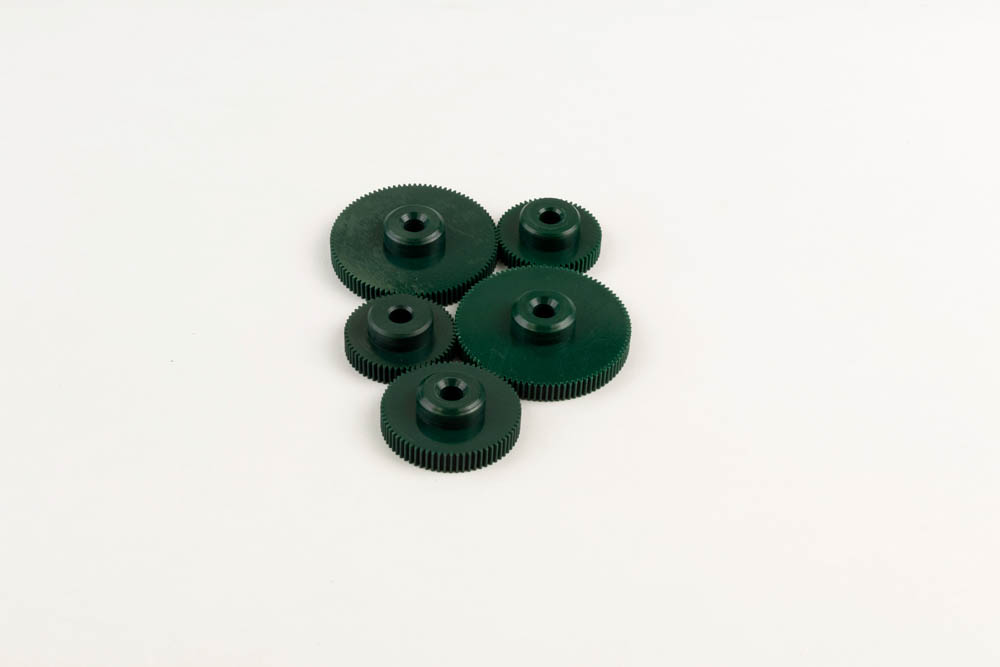
Lubricant-Free Wheels, Gears & Bushings — Durethane® G
Grease is a liability in the field. MPC’s proprietary Durethane® G platform carries graphite through the material, so wheels, gears and bushings run with their own lubricity and no grease; at about 70D it approaches metal hardness and runs quiet.
Seals & Gaskets for Chemical & Temperature Extremes
Rubber degrades and metal corrodes in the chemistries and temperature swings defense systems experience. MPC formulates seals and gaskets to that specific exposure and shapes them to the sealing face, so they hold up where standard materials give out.

Talk it through with a polyurethane expert who’ll tell you what’s achievable and what is not.
— Technical Specifications
The specs that matter for military and defense duty
Property
Range for this application
Hardness
ASTM D2240
- Shore 20A–70D, solid polyurethane
- Customized per part
Tensile strength
ASTM D412
250–7,800 PSI, solid polyurethane
Elongation
ASTM D412
160–850%, solid polyurethane
Tear strength, Die C
ASTM D624
30–800 PLI, solid polyurethane
Compression set
ASTM D395B, 158°F, 22 hrs
5–40%, solid polyurethane
Foam polyurethane (Durethane® F)
- Shore 25A–50A
- Tensile strength 800–1,400 PSI
- Tear strength, Die C 100–160 PLI
- Elongation 330–700%
- Open or closed cell, integral skin available
Self-lubricating (Durethane® G)
- 70 Shore D
- Tensile strength 5,000 PSI min
- Compression deflection 700 PSI min at 2% deflection
- Elongation 150%
- Water absorption 1.5% max
- Specific gravity 1.18
Heat, aging, hydrolysis and chemical resistance (Durethane® XL)
- Shore 70A–90A
- Tensile strength 3,000–5,000 PSI
- Tear strength, Die C 225–375 PLI
- Elongation 425–575%
- Compression set 17–20%
Volume resistivity (Durethane® C)
- Conductive range approximately 105–1011 Ω-cm
- Typical at ambient, by durometer: 5×10⁵ (10A–55A) · 5×10⁶ (65A–75A) · 5×10⁷ (85A) · 5×10⁸ (90A–60D) · 5×10⁹ (70D)
- Customizable between these values
Chemical exposure
- Thermoset polyurethane resists a wide range of chemicals and oils
- Resistance depends on the specific polyurethane chemistry, operating temperature, aeration and length of exposure
- MPC customizes the material to the chemistries and temperature swings the platform sees
Abrasion and surface finish
High abrasion resistance with tolerance to tight surface finishes
Customizable properties
- Hardness, elongation, tensile, tear and compression set are formulated to the part
- Any shape component, or machined to precise specifications
- Cast onto bonded metal cores and hubs, dual-durometer construction available
Relevant technical downloads
Document
What it gives the engineer
Solid polyurethane material specifications: hardness 20A–70D with tensile, elongation, tear and compression set.
Foam polyurethane material specifications, including open and closed cell and integral-skin options.
Self-lubricating 70D material specifications for quiet, grease-free running.
Polycarbonate polyurethane material specifications — formulated for heat, aging, hydrolysis and chemical resistance.
Conductive polyurethane material specifications, including volume resistivity ranges and material properties.
General chemical resistance guideline for MPC’s thermoset polyurethanes.
— HOW IT WORKS
From concept to scaled production
Connect With Us
Share your application, performance needs, or a part you want to improve.
Collaborate on Design
Our engineers will help optimize materials and geometry for manufacturability.
Prototype & Refine
We produce samples using our proprietary polyurethane formulations for testing.
Move to Production
Once approved, we move to scalable molding with full quality assurance.
That’s exactly the conversation we like to have – get a polyurethane expert on a quick call to pressure-test your idea before you commit.
— Proof
Case studies & white papers
Case Studies
Automation Manufacturer Reduces Robotic Impact Damage
An automation manufacturer kept seeing damage as its robotic system absorbed repeated impact through rigid stops. This case study shows how MPC’s custom-engineered polyurethane foam soaked up the shock through controlled compression, reducing impact damage without slowing cycle times.
Robotics OEM Overcomes Material Performance Limitations
A robotics OEM needed a molded part that balanced controlled stiffness, predictable wear, and environmental resistance, something no off-the-shelf material could hit. This case study shows how MPC tuned durometer, additives, and chemistry to deliver it and cut the costly redesign cycles along the way.
White Papers
Designing Robotic Systems for Shock, Vibration, and Impact
As robots move faster, shock and vibration – not just static strength – drive many failures. This white paper shows engineers how to improve reliability by managing impact energy across the whole system rather than simply building parts stronger.
Engineering Polyurethane Components for Heavy-Duty Applications
Modern automation pushes mechanical parts past what standard materials can handle. This white paper covers the material, process, and design choices behind heavy-duty polyurethane components for robotics and precision systems, so they hold up under continuous operation.
Custom Polyurethane Formulations in Robotics
When off-the-shelf materials can’t hit every requirement at once, robotics engineers turn to custom formulation. This white paper explains how MPC customizes material formulations to resolve the competing demands of wear, stiffness, and environmental resistance in robotic systems.
— Design Guide
How to specify custom polyurethane for defense platforms
— FAQ
Frequently Asked Questions
What material withstands extreme temperature, abrasion and chemical exposure on military land, sea and air platforms?
A custom-formulated cast polyurethane. MPC formulates custom materials to meet the complex environments the platform actually experiences, where rubber degrades and metal corrodes — with hardness, geometry and formulation set to the platform rather than pulled from a catalog.
Can MPC formulate and test a custom polyurethane component to support our platform's military specification?
Yes. Send the material specification — defense programs usually provide one — and MPC will match it, using an existing formulation where one fits or developing a custom one where it doesn’t.
What replaces lubricated or metal parts to cut field maintenance on defense equipment?
Lubricant-free urethane. Durethane® G carries graphite through the material, so it runs with its own lubricity and no grease — removing the contamination and grease-breakdown of metal and lubricated parts, and running quietly on moving parts like gears.
Do you make custom polyurethane foam for impact, shock and vibration protection to military specs?
Yes. MPC formulates foam to the platform’s impact, shock and vibration requirement, with open or closed cellular structures and integral skin where the part needs a finished surface.
Are your defense components made in the USA, and can you prototype and then scale production?
Yes. MPC has seven manufacturing plants in the United States, which matters when domestic supply is a contract requirement. MPC supports rapid prototyping and engineering support through to scaled production, at the low-to-moderate volumes defense programs typically need.
What components can MPC supply for defense — bumpers, seals, wheels, gears, bushings, assemblies?
All of those. MPC makes bumpers and vibration mounts, seals and gaskets, wheels, gears and bushings, and custom assemblies for land, sea and air platforms — each formulated and shaped to the exact requirements of the system rather than adapted from a catalog part.
— Keep Exploring