
Polyurethane Seals & Gaskets
Tearing, compression set and extrusion defeat rubber seals. Custom-engineered polyurethane seals hold.
— The Recurring Problems
Sealing force drift
High-cycle tooling, pumps and valves must seal identically every cycle, but rubber can tear and take a set
High-pressure extrusion
Downhole and high-pressure service sees pulsation and hot fluids, and rubber can tear and crack
Chemical attack
Acids, oils, coolants and sanitizers can swell or degrade standard seal materials
Complex surfaces
The sealing surface is often a casting, port or profile a catalog seal can’t match
Leak-test accuracy
Rubber seals are permeable to helium, which gives false results on tracer-gas leak tests
— The Differentiator
Where standard components fall short
Most engineers start with a rubber seal, a silicone seal, or a standard catalog polyurethane shape. Under pressure, chemistry or high cycle counts, each one falls short:
- Silicone can tear at high cycle counts, and rubber can take a set and lose sealing force
- Rubber can tear and extrude under high pressure and high temperature, and some materials hydrolyze
- Rubber seals are permeable to helium, so tracer-gas leak tests give false results
- Standard materials can swell or soften against oils, coolants and aggressive chemistry
- A catalog shape can’t match a complex casting, port or profile
- None can be customized to the sealing surface, chemistry and cycle life the system requires, and stock suppliers offer no engineering support
— Standard and Custom
Two ways to work with MPC
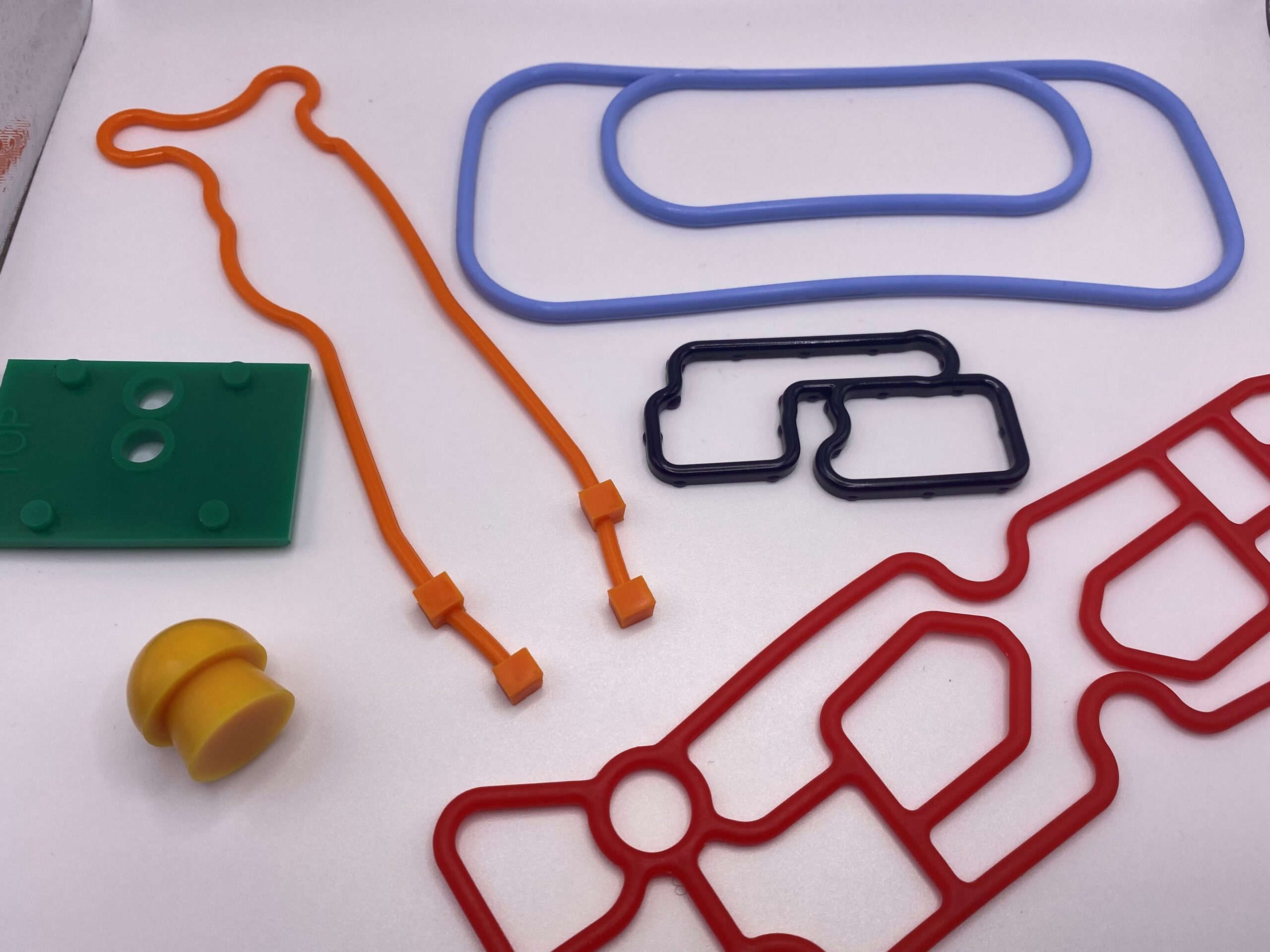
Standard seals & gaskets, proven and available
- For common sealing needs, MPC offers standard polyurethane seals and gaskets: proven formulations in standard sizes and profiles, for fast, reliable delivery
- Best when you need a known profile and size quickly, with polyurethane’s wear, tear and chemical advantages over rubber
- The standard line is customizable within the catalog options: geometry, hole or no hole, and durometer. See the catalog below
Custom seals & gaskets, engineered to your application
- For demanding applications, MPC manufactures custom seals from a formulation and geometry customized to the requirement, with higher tear strength and lower compression set than rubber, and hydrolysis and chemical resistance rubber can’t match
- Custom sealing for leak-test tooling and high-pressure, high-temperature service, molded to a complex casting, port, bore or profile
- Food-safe formulations where product contact requires it: MPC helps customers build FDA-compliant systems, and compliance is determined at the system level
How to choose
Standard is a known seal or gasket, fast. Custom is for a sealing problem a catalog part can’t solve, whether that is chemistry, pressure, temperature, cycle life or geometry. Tell us the application and we will point you to the right path.

Talk it through with a polyurethane expert who’ll tell you what’s achievable and what is not.
— featured case study
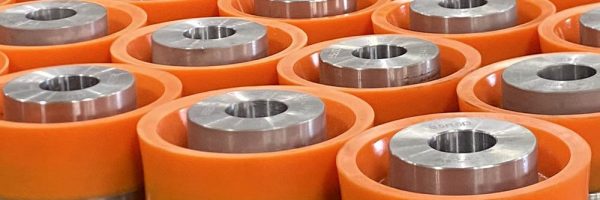
Drilling Operator Triples Mud Pump Piston Life
Rubber mud pump pistons were tearing and extruding under pressure pulsation in abrasive drilling fluid. This case study shows how MPC’s custom cast polyurethane piston ran up to 3x longer than the rubber it replaced in service to roughly 7,500 PSI and 250°F.
Rubber mud pump pistons were tearing and extruding under pressure pulsation in abrasive drilling fluid.
MPC manufactured a custom cast polyurethane piston with the tear strength and extrusion resistance for the pressure, temperature and abrasive fluid.
THE RESULT
Up to 3x the service life of the rubber it replaced
Held the seal in service to roughly 7,500 PSI and 250°F
— Technical Specifications
The specs that matter
Property
Range for this solution
Hardness
ASTM D2240
- Shore 20A–70D — solid polyurethane
- Shore 70A–90A — polycarbonate polyurethane
- Set to the seal and the service
Mechanical properties (Durethane® S)
- Tensile strength 250–7,800 PSI
- Tear strength, Die C 30–800 PLI
- Elongation 160–850%
- Compression set 5–40%
Heat, aging, hydrolysis and chemical resistance (Durethane® XL)
- Shore 70A–90A
- Tensile strength 3,000–5,000 PSI
- Tear strength, Die C 225–375 PLI
- Elongation 425–575%
- Compression set 17–20%
Chemical exposure
- Thermoset polyurethane resists a wide range of chemicals and oils
- Resistance depends on the specific polyurethane chemistry, operating temperature, aeration and length of exposure
- MPC customizes the material to the fluids, pressure and temperature the seal actually sees
Customizable properties
- Hardness, tensile, tear and compression set are formulated to the seal
- Molded to the casting, port, bore or profile it seats against
- Food-safe formulations available where product contact requires them
Relevant technical downloads
Document
What it gives the engineer
Polycarbonate polyurethane material specifications — hardness 70A–90A with the lowest compression set in the family, for high-pressure, high-temperature and aggressive-chemistry seals.
General chemical resistance guideline for MPC’s thermoset polyurethanes.
Solid polyurethane material specifications: hardness 20A–70D with tensile, elongation, tear and
The standard seal and gasket profiles and sizes, with the options the standard line can be customized within.
— Standard Offerings
Looking for a standard seal or gasket?
MPC publishes a catalog of standard molded polyurethane seals and gaskets, a standard line that is customizable within the catalog options (geometry, hole or no hole, durometer). Pick a profile and size from the catalog, or tell us and we’ll help you choose.
— Industry highlights
Where this product works
MPC seals and gaskets contain fluid, gas and pressure across industries. These are examples, not limits:
Custom sealing elements for leak-test tooling, less permeable to helium than rubber for repeatable tracer-gas results
Downhole and high-pressure seals, valve seats and mud-pump pistons for HPHT, abrasive service
Seals in wash-down and product-adjacent equipment, with FDA-compliant formulations where product contact requires. Not commodity food-lid seals
— HOW IT WORKS
From concept to scaled production
Connect With Us
Share your application, performance needs, or a part you want to improve.
Collaborate on Design
Our engineers will help optimize materials and geometry for manufacturability.
Prototype & Refine
We produce samples using our proprietary polyurethane formulations for testing.
Move to Production
Once approved, we move to scalable molding with full quality assurance.
That’s exactly the conversation we like to have – get a polyurethane expert on a quick call to pressure-test your idea before you commit.
— PROOF
Case studies & white papers
Case Studies
Drilling Operator Extends Mud Pump Valve Life
Rubber and catalog polyurethane valves were wearing out in the same high-pressure, abrasive service as the pistons alongside them. This case study shows how MPC’s custom polyurethane valve held up where the incumbents did not, in the companion case to the piston result.
White Papers
Engineering Polyurethane Components for Heavy-Duty Applications
Modern automation pushes mechanical parts past what standard materials can handle. This white paper covers the material, process, and design choices behind heavy-duty polyurethane components for robotics and precision systems, so they hold up under continuous duty.
Custom Polyurethane Formulations in Robotics
When off-the-shelf materials can’t hit every requirement at once, robotics engineers turn to custom formulation. This white paper explains how MPC tunes durometers, additives, and chemistry to resolve the competing demands of wear, stiffness, and environmental resistance in robotic systems.
— Design Guide
How to specify a polyurethane seal or gasket, and how it compares to rubber for high-pressure, high-temperature and leak-test service.
— FAQ
Frequently Asked Questions
Do you offer standard seals and gaskets, or only custom?
Both. MPC publishes a catalog of standard molded seals and gaskets for when you need a known part fast, and engineers fully custom seals for harder problems. See “Two ways to work with MPC” above, and the catalog in section 6.
What seal material holds sealing force without the tearing of silicone or the compression set of rubber?
Cast polyurethane. It has higher tear strength than silicone and lower compression set than rubber or rubber, so it holds sealing force cycle to cycle where rubber seals tear or take a set.
What resists extrusion under high pressure and high temperature where rubber fails?
A custom polyurethane seal, and for the harshest chemistry and heat, Polycarbonate-Polyurethane (Durethane® XL). MPC’s custom pistons and seals have held up at up to 7,500 PSI and 250°F in abrasive mud-pump service.
What gives the most repeatable helium or tracer-gas leak test?
A polyurethane sealing element. Polyurethane is less permeable to helium than rubber, so tracer-gas leak tests are more repeatable and give fewer false results.
Can you mold a custom seal to my exact casting, port or profile?
Yes. MPC molds custom seals and sealing elements to a complex casting, port, bore or profile, from a formulation customized to the chemistry, pressure and temperature.
Are food-safe or FDA-compliant formulations available?
Yes, where product contact requires it. MPC helps customers build FDA-compliant systems, and compliance is determined at the system level. MPC does not make FDA-approved parts or commodity food-lid seals.
— Keep Exploring