
Food Processing
MPC manufactures custom-engineered urethane parts for food processing equipment — custom-cleated belts, grippers & fingers, no-crush wheels, and rollers & chute liners that are FDA-compliant and outperform rubber, plastic, and metal.
— Recurring Problems in Food Processing
Fragile
High-durometer wheels are too aggressive and bruise or tear the product.
Grip without damage
Sticky and fragile foods must be held without crushing, tearing, or contaminating.
Food contact
Every product and contact part or surface must use a food-safe material.
Foreign-object control
Regulatory programs increasingly require detectable components.
Residue buildup
Sugars, dairy fats, and produce acids attack and build up on surfaces.
Fixed geometry
Modular belting cannot provide custom cleats, grippers, or fingers.
— The Differentiator
Where standard parts fall short
Engineers reach for standard plastics, metal, or rubber — and each falls short on fragile produce, wet, sticky, and dry products:
- None can be customized to the combination of durometer, geometry, conductivity, or abrasion resistance needs, and stock suppliers offer no engineering support
- Standard belting can’t handle products on inclines or provide custom cleats, grippers, and fingers
- High-durometer plastic and rubber wheels apply too much pressure, bruising, crushing, tearing, and cracking products
- Rubber and plastics degrade from hot water and wash-line materials
- Some standard materials aren’t food-safe for direct product or packaging contact
The Result: Damaged product, unplanned downtime, and costly maintenance cycles.
— Applications
Where custom urethane is already at work
These are the food processing applications MPC works in most often. Because every part is custom formulated for the application rather than selected from a range, the list is a starting point rather than a limit — if a component on your equipment keeps failing, we can explore if MPC’s engineered polyurethanes can be a solution.
Aggressive CIP/SIP cycles, wear and marking defeat standard parts. Custom-engineered polyurethane components prevail for continuous conveyor and sortation applications.
Sticky protein, caustic washdown and constant cycling defeat standard parts. Custom-engineered polyurethane components don’t.
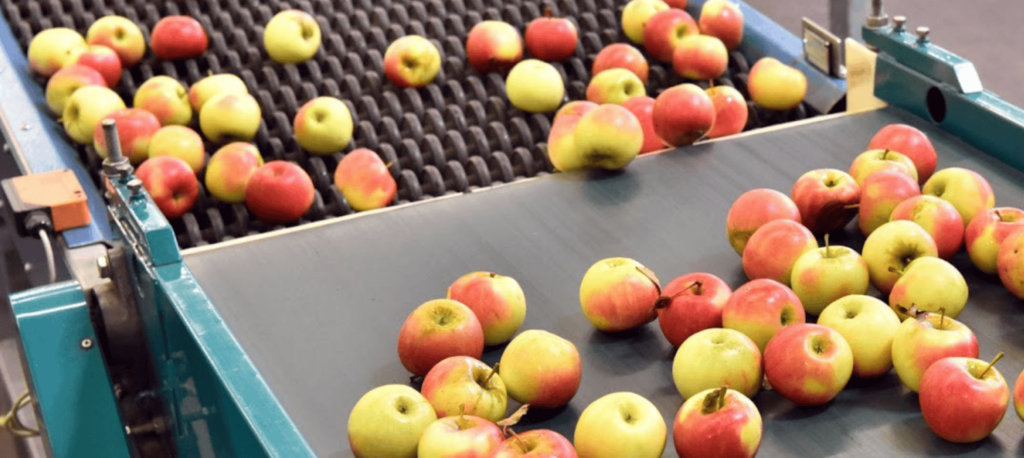
Contact pressure, wash-line water and produce acids defeat standard parts. Custom-engineered polyurethane components don’t.
Abrasive dry product, static build-up and food-contact rules defeat standard parts. Custom-engineered polyurethane components prevail.
— Case Studies
Proven in production
Customers come to MPC with a component that keeps failing, or a new part that has to be designed from scratch. These are the results — less downtime, lower cost, and products that reached the market on schedule.
Static control
A warehouse automation OEM was losing uptime to static discharge and roller wear in its AMRs. This case study shows how MPC engineered a conductive roller that reduced ESD faults by roughly 70% and delivered 2.5× the roller life.
Contamination control
A semiconductor automation manufacturer needed rollers that were cleanroom-compliant, long-wearing, and static-controlled all at once. This case study shows how MPC’s custom conductive formulation passed ISO cleanroom testing and ran roughly 4× longer than the plastic rollers it replaced, with zero contamination events.
Load and continuous duty
A continuous-duty robotics manufacturer kept losing rollers to flat-spotting under constant load and start-stop motion. This case study shows how MPC’s custom roller eliminated the flat spots and delivered about 2× the service life, cutting the unplanned maintenance that was slowing the line.
— Solutions
Common problems we solve
These are the problems custom urethane technology is most often specified to solve, across every kind of industrial equipment.
Paper, film, board and packaging have to be gripped, moved and released without slipping or marking. Urethane contact surfaces are formulated with the coefficient of friction tuned to the media, and hold it consistently unit to unit.
Wheels, rollers and drive elements carry load and transmit motion every shift. Cast urethane holds its profile and runs quietly where rubber goes out of round and plastic wears through.
Hard stops and rigid components pass shock straight into the machine. Urethane and urethane foam absorb impact through controlled compression, without slowing the system.
Seals and gaskets have to hold under pressure, chemical exposure and repeated cycles. Custom urethane is formulated to the fluid, the pressure and the temperature the seal will actually experience in operation.
Insulating parts build static charges around sensitive electronics. MPC’s patented metal salt conductive urethane technology dissipates it uniformly through the whole part, and keeps doing it as the part wears.
— FAQ
Frequently Asked Questions
What belt or cleat handles sticky or fragile products without marking, tearing, or crushing?
A custom polyurethane belt or cleat manufactured to your exact specifications. MPC manufactures belts and cleat grips designed to the needs of your system at a durometer that prevents damage.
What wheel prevents damage when moving products?
Cast polyurethane no-crush wheels. Designed to stop pushing back, past a certain load, its spokes and voids bend inward rather than resisting, so contact pressure stays gentle. The number of voids, the spoke angles, the wall thickness, and material selection set how compliant it is.
Are food-safe, FDA-compliant, and detectable or blue formulations available for product contact?
Yes. FDA-compliant formulations are available, and parts can be pigmented or made with detectable additives for regulatory compliance programs. Food-contact compliance is determined for your system rather than granted to a material. MPC supplies the formulation and documentation your qualification needs.