
Semiconductor Manufacturing
Cleanroom limits, process chemistry, thermal extremes, and abrasion break standard catalog parts. Custom-engineered urethane parts, tuned to the specific application, hold up without compromising wafer quality.
— The Recurring Problems
Cleanroom contamination
Particles and outgassing of subcomponents fail ISO cleanliness limits
Process chemistry
Etch, clean, and slurry degrade commonly used elastomers
Thermal extremes
Fluctuating fab temperatures reduce dimensional stability.
Wear and abrasion
Replacement drives tool downtime and product quality issues.
Static / ESD
Insulating materials build electrostatic charges that can damage products or interfere with fab processes
Micro precision
Few-millimeter parts are not possible with standard manufacturing methods
— The Differentiator
Where standard materials fall short in the fab
No off-the-shelf material clears the fab’s full set of demands at once, so the usual mix — silicone, EPDM, rubber, catalog urethane — each falls short somewhere:
- Silicone outgasses and standard urethane and plastics shed particles — failing cleanroom particulate and low-outgassing limits
- EPDM and standard rubber swell and soften in etch, clean, and slurry chemistries
- Insulating rubber, plastic, and urethane can't dissipate static safely around sensitive components
- Materials clean enough for the fab wear too fast; durable ones fail the cleanliness test
- Few-millimeter parts are too complex for standard manufacturing methods
The Result – Wafer contamination, scrap, tool downtime, frequent replacement, and failed qualifications — and even one failure can stop the tool or cause product defects, costing millions in lost revenue.
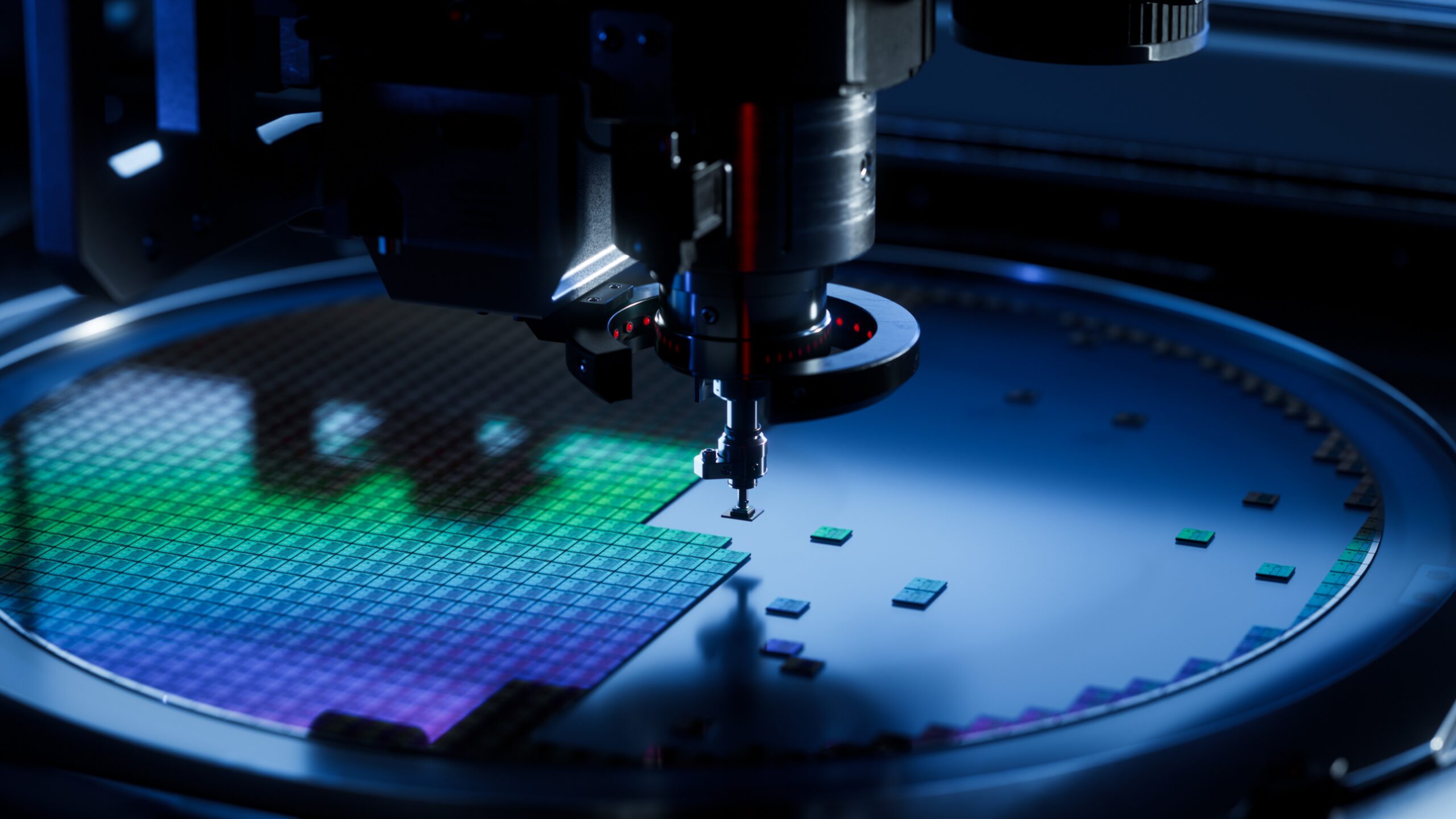
— Solution Spotlights
The custom parts that solve it
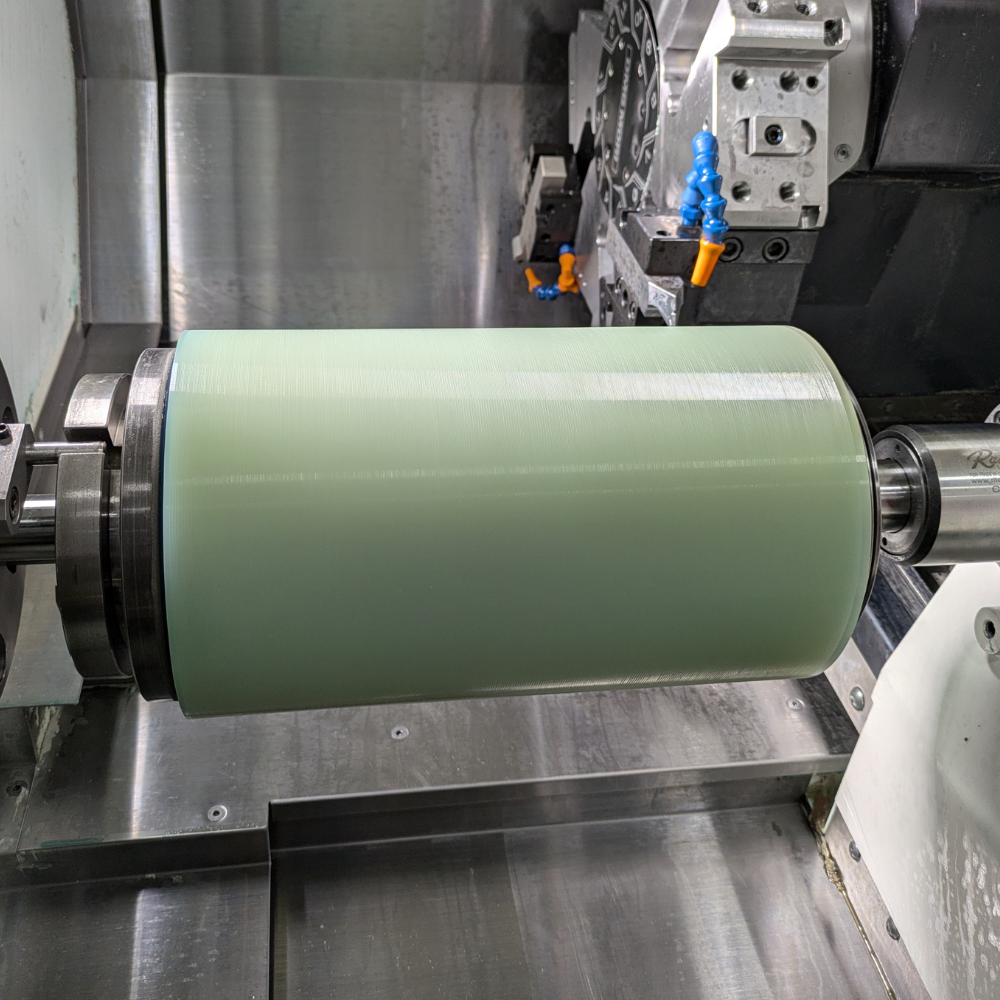
Wire Saw Guide & Pulleys
Urethane is the ideal material for wire-saw guides and pulleys used in wafering applications — MPC provides turnkey services for coating, grooving, and refurbishing existing rollers to extend service life.
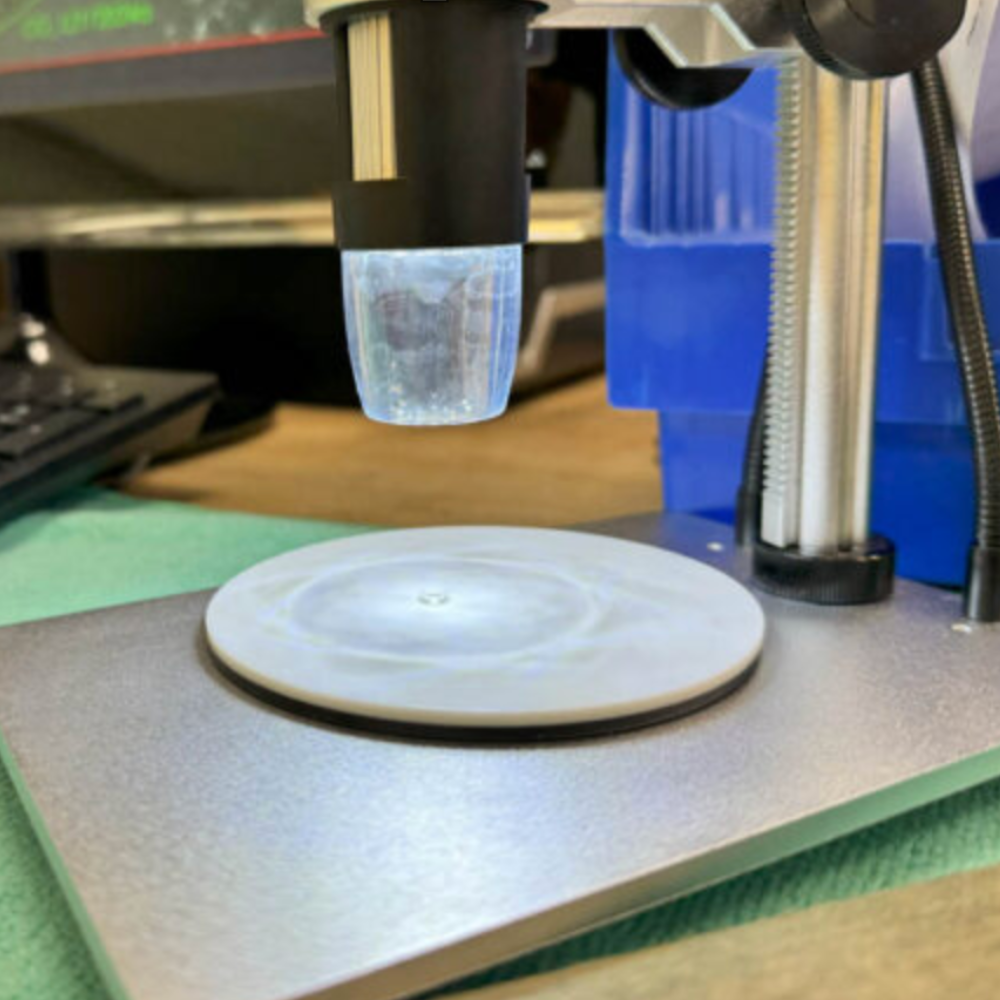
Micro-Molded Products
MPC’s micro-molded polyurethane components offer unmatched precision, customization and performance while pushing the boundaries of miniaturization.
Conductive Rollers
Rollers made with our conductive urethane formulations (Durathane C®) with stable volume of resistivity (~E5–E11 Ωcm). For one high-stakes customer, rollers passed ISO particulate testing with ~4× wear life and zero contamination ensuring cleanliness, long-term wear, and static control in one material.
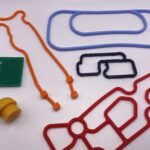
Seals & Gaskets
Custom urethane seals and grommets resist the etch, clean, and slurry chemistries that break down commonly used elastomers, while meeting the cleanroom particulate and low-outgassing limits rubber and silicone can’t.

Talk it through with a polyurethane expert who’ll tell you what’s achievable and what is not.
— Technical Specifications
The specs that matter for semiconductor duty
Property
Range for this application
Hardness
ASTM D2240
- Shore 20A–70D for solid and conductive formulations
- Shore 25A–50A for foam formulations
- 70 Shore D for the graphite-infused, self-lubricating grade
Volume resistivity
- Conductive formulating band approximately 105–1011 Ω-cm
- Typical at ambient, by durometer: 5×10⁵ (10A–55A) · 5×10⁶ (65A–75A) · 5×10⁷ (85A) · 5×10⁸ (90A–60D) · 5×10⁹ (70D)
- Full published span across conductive and non-conductive grades: 5×10⁵–7×10¹⁵ Ω-cm
Conductive chemistry
- Metal salt dissolved into the polymer backbone before cure. Uniform conductivity through the whole part, not a surface treatment
- Leaves no marks or residues on contact surfaces and does not contaminate electronic or mechanical devices with shed particles
Mechanical properties, solid grades
- Tensile strength 250–7,800 PSI
- Tear strength, Die C 30–800 PLI
- Elongation 160–850%
- Compression set 5–40%
Mechanical properties, conductive grades
- Tensile 250–7,000 PSI · tear 50–400 PLI · elongation 160–850% · compression set 5–40%
- Available solid or foam
Mechanical properties, foam grades
- Tensile strength 800–1,400 PSI
- Tear strength, Die C 100–160 PLI
- Elongation 330–700%
- Self-cleaning pores shed liquids; open or closed cell; integral skin option
Self-lubricating option, graphite-infused
- 70 Shore D · tensile 5,000 PSI min · compression deflection 700 PSI min at 2% deflection · elongation 150% · water absorption 1.5% max · specific gravity 1.18
- Avoids harmful or messy lubricants; quiet operation for moving parts
Chemical exposure
- Thermoset polyurethane resists a wide range of chemicals and oils. See the chemical resistance table for the general guideline by substance
- Resistance depends on the specific polyurethane chemistry, operating temperature, aeration and length of exposure
- Values are at room temperature unless otherwise specified; MPC recommends testing in the actual operating environment
Abrasion and surface finish
High abrasion resistance with tolerance to tight surface finishes
Relevant technical downloads
Document
What it gives the engineer
Conductive grade table and the full volume resistivity span for ESD-controlled rollers, pins and handling parts.
Why metal-salt conductivity is uniform and stays stable as the part wears, with resistivity by durometer, temperature and humidity.
Full solid-grade table: hardness 20A–70D with tensile, elongation, tear and compression set per grade.
Foam grade table, plus the self-cleaning pore structure and integral-skin options.
The heat-, aging- and hydrolysis-resistant grades, and the lowest compression set in the family.
The self-lubricating 70D grade for moving parts that cannot carry a lubricant.
General chemical resistance guideline by substance, with the conditions the guideline assumes.
— HOW TO WORK WITH US
From concept to scaled production
Connect With Us
Share your application, performance needs, or a part you want to improve.
Collaborate on Design
Our engineers will help optimize materials and geometry for manufacturability.
Prototype & Refine
We produce samples using our proprietary polyurethane formulations for testing.
Move to Production
Once approved, we move to scalable molding with full quality assurance.
That’s exactly the conversation we like to have – get a polyurethane expert on a quick call to pressure-test your idea before you commit.
— Proof
Case studies & white papers
Case Studies
Semiconductor Manufacturer Achieves Prototype-to-Production in Six Months
A semiconductor manufacturer needed a critical IC-production component that could take extreme heat and meet strict cleanliness, which standard materials couldn’t deliver. This case study shows how MPC took the part from prototype to full production in about six months while hitting every thermal and contamination requirement.
Semiconductor Manufacturer Delivers Micro-Molded Part in Six Weeks
A micro-sized part only a few millimeters across that other polyurethane suppliers could not produce, delivered as First Article in six weeks and in production for over five years.
Semiconductor Automation Manufacturer Achieves 4x Roller Life
A semiconductor automation manufacturer needed rollers that were cleanroom-compliant, long-wearing, and static-controlled all at once. This case study shows how MPC’s custom conductive formulation passed ISO cleanroom testing and ran roughly 4× longer than the plastic rollers it replaced, with zero contamination events.
White Papers
Custom Polyurethane Parts and Components for the Semiconductor Industry
Semiconductor equipment makers need components that resist abrasion, chemicals, and heat without shedding particles. This white paper explains how custom thermoset polyurethane from MPC meets those demands, and where it outperforms the standard materials engineers usually reach for.
Thermoset Polyurethanes and the Semiconductor Industry
This white paper introduces MPC and the role thermoset polyurethane plays across semiconductor manufacturing. It explains how the material’s abrasion, chemical, thermal, and low-outgassing performance supports the demanding equipment applications engineers rely on.
Engineering Urethane Wheels and Rollers for Robotics and Automation
Wheels and rollers are among the hardest-working parts in any automated system. This white paper walks engineers through designing them for load, wear, traction, and reliability in high-duty robotics, so they last instead of becoming the weak link.
Engineering Polyurethane Components for High-Duty Applications
Modern automation pushes mechanical parts past what standard materials can handle. This white paper covers the material, process, and design choices behind high-duty polyurethane components for robotics and precision systems, so they hold up under continuous duty.
— Design Guide
How to design for semiconductor applications
What to consider, what’s possible, and where custom urethane outperforms other material options – drawn from the same expertise MPC brings to your application.
— FAQ
Frequently Asked Questions
Will custom urethane parts outgas or shed particles in an ISO Class cleanroom?
No. MPC formulates low-outgassing, cleanroom-suitable thermoset polyurethane for this duty. In one example, custom conductive rollers passed ISO cleanroom particulate testing and contributed zero contamination in service.
How does urethane hold up to etch, clean and slurry chemistries that degrade EPDM and silicone?
Custom polyurethane resists the process chemistries that swell, soften or break down EPDM and silicone. MPC tunes the formulation to the specific chemistry each part sees, so the exposure that fails an off-the-shelf seal does not fail the urethane part.
Can one material handle wear, cleanliness and static control at the same time?
Yes. A single urethane formulation can be tuned for all three. MPC’s custom conductive rollers passed cleanroom certification, delivered about 4x wear life and contributed zero contamination, combining wear resistance, cleanliness and controlled conductivity in one part.
Can urethane parts dissipate static or ESD safely?
Yes. Durethane® C is engineered with controllable, stable volume resistivity across roughly E5 to E11 Ωcm, so electrostatic charges can be managed safely rather than resulting in machine or product issues.
Can MPC mold a micro part that other suppliers could not make?
Yes. MPC has micro-molding capabilities for parts only a few millimeters across. One micro molded part that other polyurethane suppliers could not produce was delivered as first article in four weeks and has been in production for over five years.
— Keep Exploring