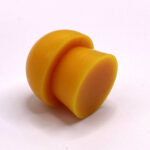
Silicone pads compression-set and edge-tear, and grip fades
Seal wear
Rubber seals wear at high-frequency operating cycles, resulting in accuracy drifts
Wheel slip
Hard plastic slips and creates unwanted noise on wet plates
ESD sample loss
Static buildup can compromise sample testing
Tiny, complex parts
Micro-molded parts with sub-mm features are a challenge for standard part manufacturers
Costly downtime
A worn part on a testing or diagnostic system means errors, service calls, and costly downtime
— The Differentiator
Where standard materials fall short in lab automation
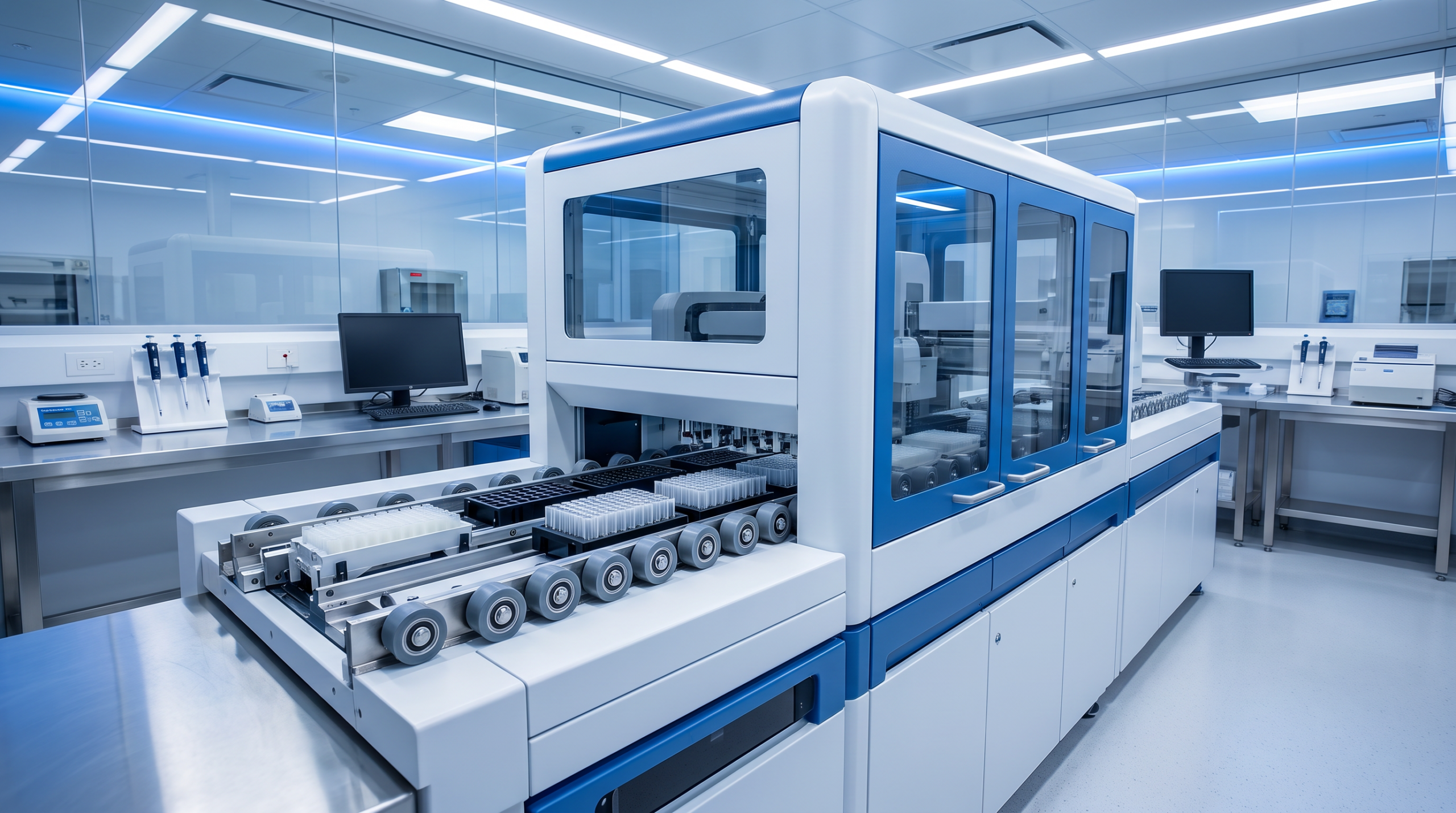
No catalog part clears the full set of performance requirements in high-cycle lab automation systems, so the usual choices each fall short somewhere:
Silicone gripper pads can take a set and are prone to tears — grip degrades causing miss-feeds
Rubber seals wear quickly through repeated cycles — driving sealing failures and test variation
Plastic wheels are hard — they generate unwanted noise, and may not have the right coefficient of friction to transport media successfully; rubber can take a set and lose shape
Insulating plastics let static build-up compromising testing results
None can be customized to the combination of durometer, traction and geometry the instrument needs, and stock suppliers offer no engineering support
The Result – Costly downtime on lab automation systems, testing and sampling errors, sample loss, noise, and recurring replacement and service.
— Solution Spotlights
What it is + how it's different
Micro-Molded Gripper Pads & Precision Parts
MPC micro-molds the sub-millimeter jaw features catalog molders can’t. Our micro-molding process uses our proprietary thermoset polyurethane materials, which results in products with far higher tear strength and abrasion resistance than silicone and maintains its grip through high-cycle duty instead of glazing or tearing.
Rubber and plastic seals and gaskets used in sample collection systems with continuous cycles can wear out, impacting test accuracy. Cast polyurethane outlasts rubber and plastics, and MPC can customize the material to fit the exact needs of your application.
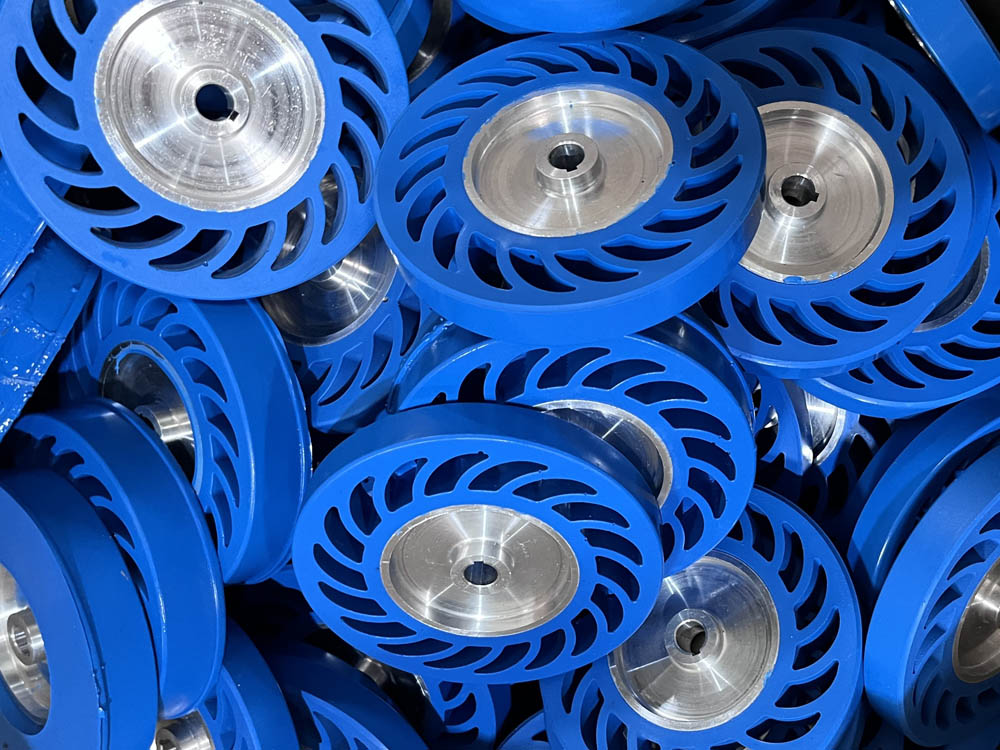
Hard plastic wheels slip and create unwanted noise, and rubber can take a set. MPC manufactures wheels in custom polyurethane formulations to match the exact needs of your application, such as traction and quiet travel, bonded to a core, or conductive polyurethane (Durethane® C) for static dissipation.
MPC manufactures sample-transport and drive rollers in custom-durometer urethane, bonded to the core so they don’t debond under load, with conductive polyurethane (Durethane® C) where carriers must move without static buildup.
End-of-travel bumpers and isolation feet take repeated impact and dampen vibration on high-throughput platforms. Custom urethane is customized to the durometer and geometry each stop needs, holding shape where rubber takes a set.
Choosing Thermoset Polyurethane for Medical Device Design
Medical device designers weigh polyurethane against metal and plastic without much to compare them on. This white paper sets thermoset polyurethane beside both — on flexibility, customizability, molding options and biocompatibility — and walks through a mobile imaging case where a custom cast bumper stopped a retracting cord from damaging the machine.
Engineering Polyurethane Components for Heavy-Duty Applications
Modern automation pushes mechanical parts past what standard materials can handle. This white paper covers the material, process, and design choices behind heavy-duty polyurethane components for robotics and precision systems, so they hold up under continuous operation.
Engineering Urethane Wheels and Rollers for Robotics and Automation
Wheels and rollers are among the hardest-working parts in any automated system. This white paper walks engineers through designing them for load, wear, traction, and reliability in heavy-duty robotics, so they last instead of becoming the weak link.
What gripper-pad material holds labware grip through high-cycle duty without the compression-set and edge-tear of silicone?
Cast polyurethane. At the same hardness it has far higher tear strength and abrasion resistance than silicone, so a micro-molded pad holds grip through high-cycle use instead of tearing. MPC customizes the material to the exact needs of your system.
What seals or gaskets outlast rubber at high-frequency cycles?
Thermoset polyurethane seals and gaskets. Urethane holds its seal over far more cycles than plastic or rubber at the same durometer, so pressure and volume accuracy hold instead of drifting. MPC customizes the material properties to match the needs of your sealing application.
What sample-carrier wheel material gives consistent traction on testing media without the slip and noise of plastics?
Custom thermoset polyurethane. It grips testing media consistently over time and runs quietly where hard plastic slips, and it keeps its shape where rubber takes a set. Bonded-hub construction keeps the wheel from debonding under heavy loads.
How do I stop static buildup from compromising samples or test results in a high-throughput analyzer?
Use a conductive polyurethane wheel or roller. Durethane® C is a metal-salt conductive material that dissipates static without shedding particles, with volume resistivity customized to your ESD target across roughly 10⁵–10¹⁵ Ωcm, so static bleeds off instead of building on the carrier.
Can you micro-mold sub-mm geometries to my instrument's specifications?
Yes. MPC’s micro-molding is a cast-polyurethane process that produces sub-millimeter features and that catalog molders can’t hold. Bring us design and specifications, and MPC engineers the part to it.