Rigid stops and hard interfaces transfer shock straight into components, which can cause misalignment, stress and maintenance
Takes a set
Rubber bumpers and stock foam tear and take a set under repeated impact, so protection and dampening drift
Vibration
Vibration in precision equipment can degrade performance, and mounts must dampen it and hold their height over life
Environment
Heat, chemicals, UV and seawater can degrade a protective part over the life of the equipment
One part, two jobs
Many applications need both a soft energy-absorbing zone and a hard structural zone in one part
— The Differentiator
Where standard components fall short
Most engineers start with rubber or neoprene bumpers and pads, stock foam, rigid stops, or two-piece assembled parts. Each one falls short:
Rigid stops and hard interfaces can transfer shock straight into the protected component
Rubber bumpers can tear and take a set under repeated impact, so dampening drifts
Stock foam can take a set and lose height and recovery over time
Assembled two-piece parts can fail at the bonded interface
None can be customized to the combination of energy absorption, dampening and durometer the system requires, and stock suppliers offer no engineering support
— How MPC solves it
How MPC solves it
A protective part customized to the impact
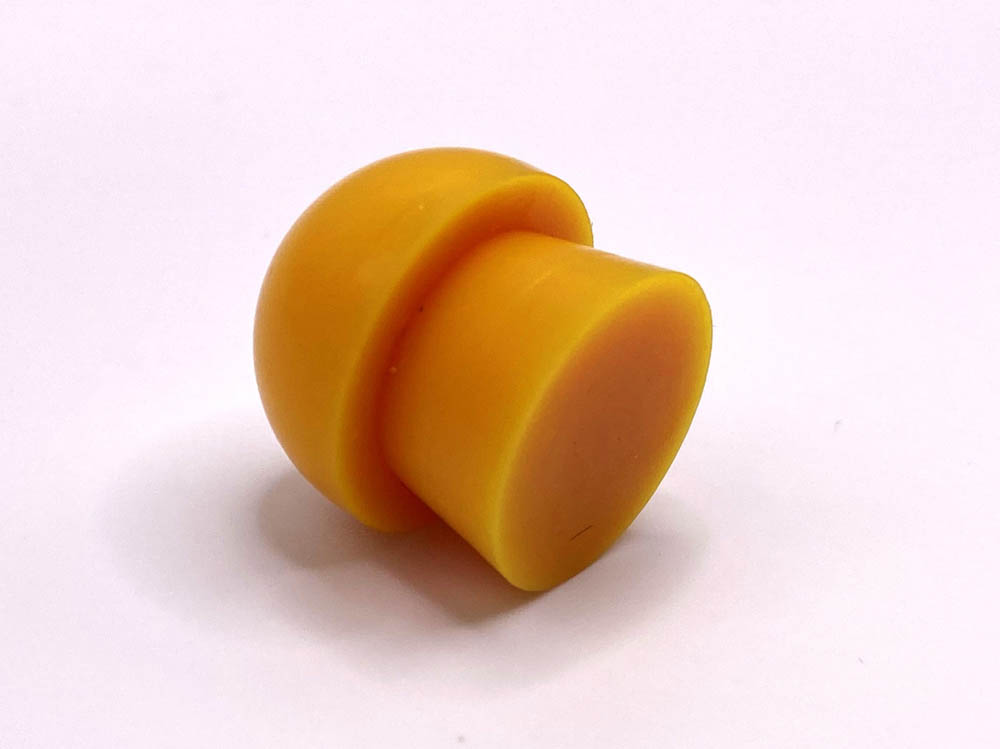
Every MPC bumper is custom-engineered. MPC manufactures custom polyurethane bumpers, pads and cast polyurethane foam components, using proprietary polyurethane customized to the impact or vibration it manages. Our engineered polyurethanes have far lower compression set than stock foam or rubber, so they hold their protective properties over life.
Have an application in mind?
Talk it through with a polyurethane expert who’ll tell you what’s achievable and what is not.
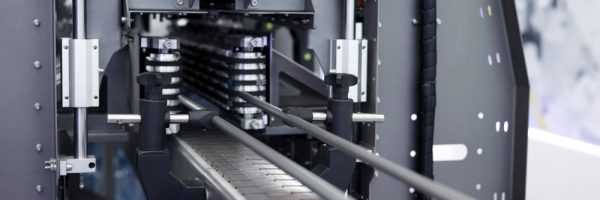
An automation manufacturer kept seeing damage as its robotic system absorbed repeated impacts through rigid stops. This case study shows how MPC’s custom-engineered urethane foam soaked up the shock through controlled compression, reducing impact damage without slowing the machine cycle.
THE PROBLEM
An automated system was taking recurring damage from incidental impacts, with rigid stops transferring shock into robotic components.
WHAT MPC DID
MPC’s engineered cast polyurethane foam component absorbed the impact energy through controlled compression.
• Shore 20A–70D — solid polyurethane • Customized per part
Mechanical properties (Durethane® S)
Tensile strength 250–7,800 PSI
Tear strength, Die C 30–800 PLI
Elongation 160–850%
Compression set 5–40%
Foam polyurethane (Durethane® F)
• Shore 25A–50A • Tensile strength 800–1,400 PSI • Tear strength, Die C 100–160 PLI • Elongation 330–700% • Open or closed cell; integral skin available
Heat, aging, hydrolysis and chemical resistance (Durethane® XL)
• Shore 70A–90A • Tensile strength 3,000–5,000 PSI • Tear strength, Die C 225–375 PLI • Compression set 17–20%
Customizable properties
• Hardness, tensile, tear and compression set are formulated to the part • Any shape component, or machined to precise specifications • Dual-durometer construction: a soft energy-absorbing zone over a hard structural zone in one part • Cast onto machined metal inserts and cores
Polycarbonate polyurethane material specifications — hardness 70A–90A with the lowest compression set in the family, for high-pressure, high-temperature and aggressive-chemistry seals.
Designing Robotic Systems for Shock, Vibration, and Impact
As robots move faster, shock and vibration – not just static strength – drive many failures. This white paper shows engineers how to improve reliability by managing impact energy across the whole system rather than simply building parts stronger.
Engineering Polyurethane Components for Heavy-Duty Applications
Modern automation pushes mechanical parts past what standard materials can handle. This white paper covers the material, process, and design choices behind heavy-duty polyurethane components for robotics and precision systems, so they hold up under continuous duty.
What bumper or foam absorbs repeated impact without tearing or taking a compression set like rubber?
A custom cast polyurethane foam component or bumper with low compression set. MPC engineers the density and recovery to absorb repeated impact through controlled compression, so it holds its protective properties over life where rubber tears and takes a set.
What vibration mount holds its dampening and height without the drift of stock foam?
A custom polyurethane mount customized to the vibration. Its low compression set holds height and dampening over life where stock foam takes a set and drifts, and MPC customizes the durometer and geometry to the vibration the mount actually sees.
Can you make a part with a soft energy-absorbing zone and a hard structural zone in one piece?
Yes, with dual-durometer construction. MPC can manufacture dual-durometer products that include a soft energy-absorbing zone and a hard structural zone together in one part.
What is the difference between integral-skin foam, closed-cell foam and solid polyurethane for a bumper?
Integral-skin foam gives a tough outer surface over a cushioning core; closed-cell foam absorbs energy with a sealed cell structure; and solid polyurethane provides structural strength. MPC selects and combines them based on the impact, environment and load the part sees.
Do you make standard bumpers, or is every bumper custom?
Every MPC bumper is custom-engineered. There is no off-the-shelf catalog part; each one is customized to the impact or vibration, the environment and the durometer the application needs.