
Static Dissipation
Static buildup can damage critical electronics, pull contaminants into critical media paths or cause media misfeeds. Conductive polyurethane carries it away.
— The Recurring Problems
Electrostatic discharge
Friction between rollers, belts and product generates charges that arc through sensitive electronics, causing intermittent faults and downtime
Carbon filler shedding
A part whose conductivity depends on carbon filler loses conductivity over life and sheds conductive particles as it wears, contaminating the process
Contaminant attraction
On electrical steel and wafers, surface charge attracts debris that becomes inclusions or defects in the product
Two jobs at once
The part still has to grip, roll, seal or convey while holding a conductivity target
Cleanroom trade-off
Cleanroom work needs static control AND low particulate generation at the same time, and most materials deliver only one
Bulk-dust handling
Non-conductive low-pressure pipe builds static in abrasive, bulk-material transport, a safety concern where dust is present
— The Differentiator
Where standard components fall short
Most engineers start with carbon-loaded conductive rubber or polyurethane, insulating plastics, metal, or a bolt-on antistatic brush. Each one falls short:
- Carbon-loaded parts need heavy filler loading, can mark, and can shed conductive particles into the process as they abrade
- Their conductivity can drop over service life, so the part stops doing the job it was specified for
- Insulating plastics and standard polyurethane let electrostatic charge build until it finds a path
- Non-conductive low-pressure pipe builds static in abrasive bulk transport, which is a safety concern where dust is present
- Antistatic brushes add cost and can interfere with the media path
- None can be customized to hold a resistivity target and still grip, roll or convey, and stock suppliers offer no engineering support
— Solution Spotlights
The products that solve this problem
MPC’s patented conductive polyurethane technology dissolves the conductive agent into the polymer itself. Resistivity becomes a property of the material rather than a coating or filler, so it does not drift as the part wears and there is nothing to shed into the process. MPC customizes the volume resistivity to meet the needs of your system, while the part still grips, rolls or conveys.
Conductive Rollers
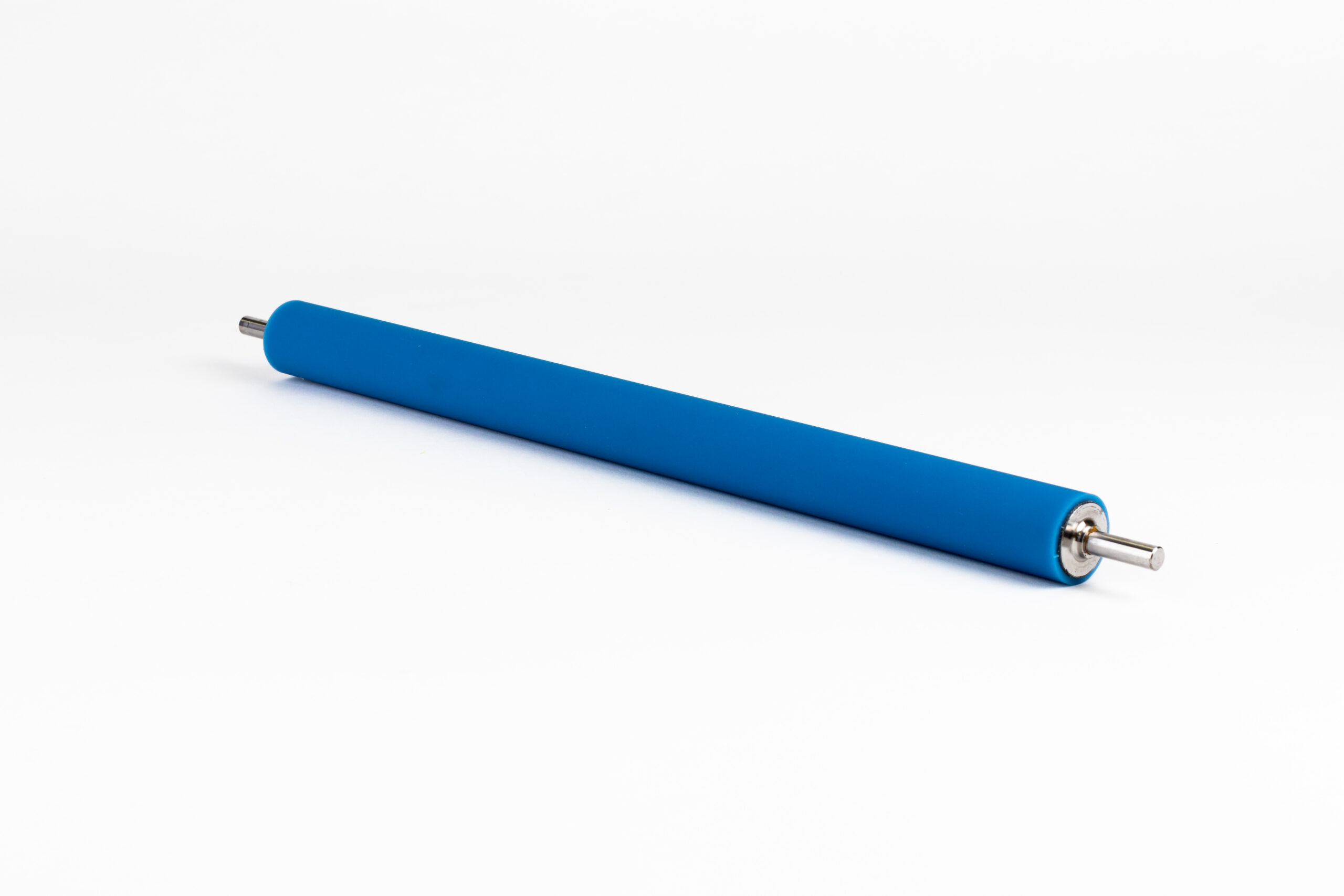
Conductive rollers manufactured to a volume resistivity you specify, typically 10⁶ to 10⁸ Ω-cm for safe dissipation. The value holds as the surface wears, so the roller keeps carrying charge out of the line for its whole service life. Cast onto machined cores, with the abrasion resistance for continuous operation.
Conductive Wheels
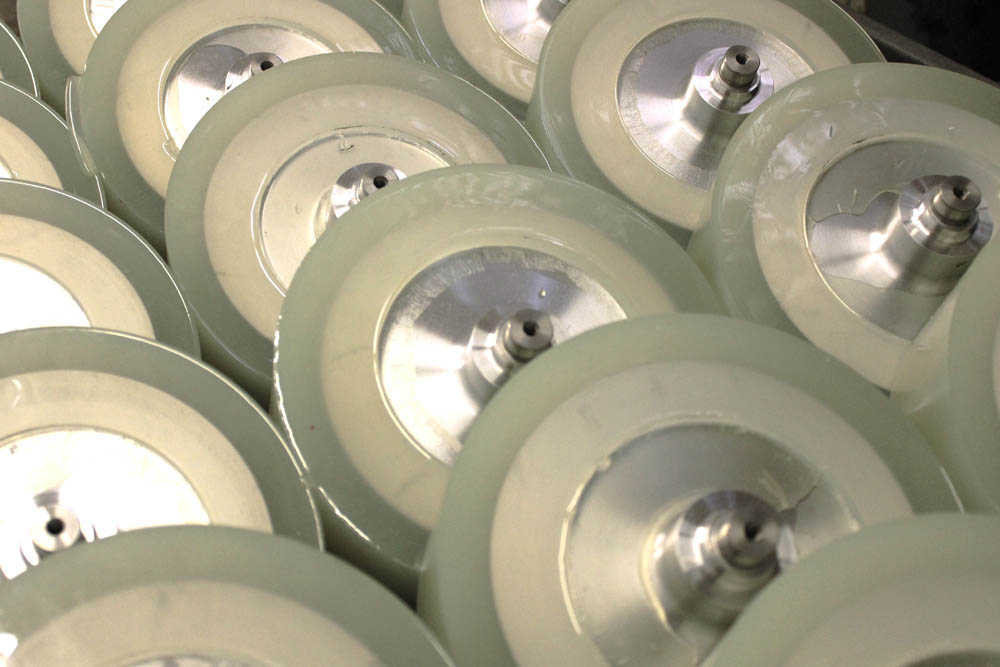
Conductive cast wheels and casters that dissipate charge without shedding, customized to the ESD target, non-marking and long-wearing. For cleanroom duty a single formulation holds static control and low particulate generation together, so you don’t trade cleanliness for wear life.
Durastatic® Static-Dissipative Pipe
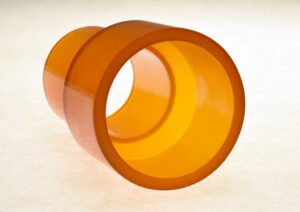
Static-dissipative low-pressure polyurethane pipe with anti-static properties that safely dissipate charge, plus smooth, abrasion-resistant internal surfaces for abrasive and bulk-material transport. It keeps carrying abrasive material where steel wears and corrodes, while dissipating the static that non-conductive pipe builds.

Talk it through with a polyurethane expert who’ll tell you what’s achievable and what is not.
— featured case study
Warehouse Automation OEM Cuts ESD Faults 70% (CS-01)
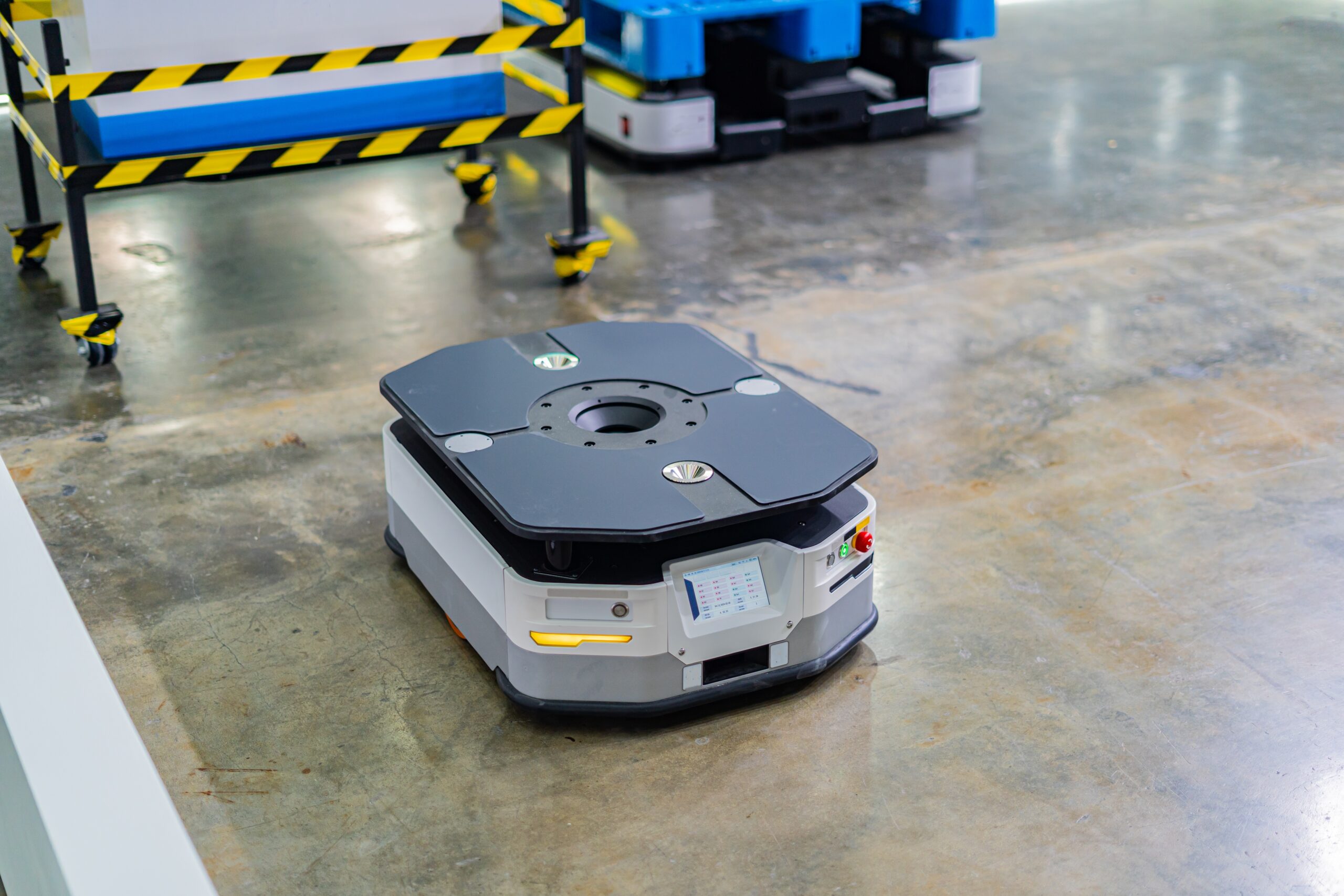
A warehouse-automation OEM was losing uptime to static: friction between rollers and drive belts generated static buildup that arced through sensors and control modules, causing intermittent faults. Rubber rollers couldn’t dissipate the charge or survive 24/7 duty.
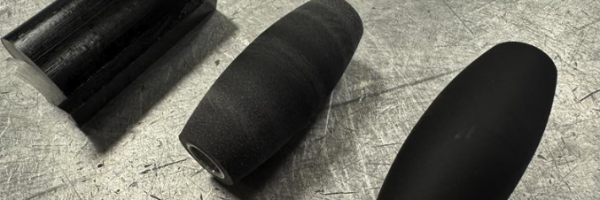
MPC built a conductive roller customized to a volume resistivity of 10⁶ to 10⁸ ohm-cm at 75A, bonded to machined aluminum cores, with the wear strength for continuous duty.
THE RESULT
Reduction in ESD-related faults
Roller life
Standardized it across its entire AMR platform
— Industry Applications
Where this problem shows up
The same static-control problem shows up in any application where charge threatens electronics, premium surfaces or safety. For common examples of static dissipation solutions across different applications, check out the below industry pages:
Clean, low-particulation, static-controlled wafer-handling rollers
— Technical Specifications
The specs that matter for media handling
Property
Range for this solution
Hardness
ASTM D2240
- Shore 20A–70D — solid polyurethane
- Customized per part
Mechanical properties (Durethane® S)
- Tensile strength 250–7,800 PSI
- Tear strength, Die C 30–800 PLI
- Elongation 160–850%
- Compression set 5–40%
Abrasion and surface finish
High abrasion resistance with tolerance to tight surface finishes
Volume resistivity (Durethane® C)
- Conductive range ≈ 10⁵–10¹¹ Ω-cm
- Typical dissipation target 10⁶–10⁸ Ω-cm, held part to part
- Typical at ambient by durometer: 5×10⁵ (10A–55A) · 5×10⁶ (65A–75A) · 5×10⁷ (85A) · 5×10⁸ (90A–60D) · 5×10⁹ (70D)
Customizable properties
• Hardness, elongation, tensile, tear and compression set are formulated to the part
• Any shape component, or machined to precise specifications
• Cast onto machined metal cores and hubs; dual-durometer construction available
Relevant technical downloads
Document
What it gives the engineer
Conductive polyurethane material specifications, including volume resistivity ranges and material properties.
In-depth overview of MPC’s patented metal salts technology, which provides stable volume resistivity as parts wear.
Solid polyurethane material specifications: hardness 20A–70D with tensile, elongation, tear and compression set.
General chemical resistance guideline for MPC’s thermoset polyurethanes.
— HOW IT WORKS
From concept to scaled production
Connect With Us
Share your application, performance needs, or a part you want to improve.
Collaborate on Design
Our engineers will help optimize materials and geometry for manufacturability.
Prototype & Refine
We produce samples using our proprietary polyurethane formulations for testing.
Move to Production
Once approved, we move to scalable molding with full quality assurance.
That’s exactly the conversation we like to have – get a polyurethane expert on a quick call to pressure-test your idea before you commit.
— PROOF
Case studies & white papers
Case Studies
Semiconductor Automation Manufacturer Achieves 4x Roller Life
A semiconductor automation manufacturer needed rollers that were cleanroom-compliant, long-wearing, and static-controlled all at once. This case study shows how MPC’s custom conductive formulation passed ISO cleanroom testing and ran roughly 4× longer than the plastic rollers it replaced, with zero contamination events.
Automation OEM Launches Cleanroom Robotics On Schedule
An automation OEM needed cleanroom-rated wheels that were also tough enough to last. This case study shows how MPC developed a custom conductive wheel that met the ISO cleanliness requirements with extended wear life and validated the part in time to keep the customer’s launch on schedule.
White Papers
Engineering Polyurethane Components for Heavy-Duty Applications
Modern automation pushes mechanical parts past what standard materials can handle. This white paper covers the material, process, and design choices behind heavy-duty polyurethane components for robotics and precision systems, so they hold up under continuous duty.
— Design Guide
How to specify conductive polyurethane parts to solve static dissipation problems:
— FAQ
Frequently Asked Questions
What conductive material holds a stable volume resistivity through wear and doesn’t shed particles like carbon-black-loaded parts?
A metal-salt conductive polyurethane. MPC dissolves the conductive agent into the polymer, so volume resistivity is uniform through the whole part and stays stable through wear, and it does not shed conductive particles the way carbon-black-loaded materials do.
What conductive roller or wheel controls static without marking a premium surface or contaminating the process?
A cast conductive polyurethane part customized to your volume resistivity target. It carries static buildup out of the line without marking or shedding, so it protects premium surfaces and keeps the process clean while still gripping and rolling.
Can I get static control and cleanroom-level low particulate generation in the same part?
Yes. MPC formulates conductive polyurethanes that hold static control and low particulate generation together. In one case it passed ISO cleanroom particulate testing with zero contamination events, so you don’t trade cleanliness for wear life.
What low-pressure pipe safely dissipates static where combustible dust is handled?
Static-dissipative Durastatic polyurethane pipe. Its anti-static properties safely dissipate charge, and its smooth, abrasion-resistant internal surface stands up to abrasive, bulk-material transport.
Can you set a specific volume resistivity target and hold it part-to-part?
Yes. MPC customizes the volume resistivity to your specifications, typically 10⁶ to 10⁸ ohm-cm for safe static dissipation, and holds it part-to-part.
— Keep Exploring