
Dry & Extruded Foods — Milling, Extrusion & Pet Food
Abrasive dry product, static build-up and food-contact rules defeat standard parts. Custom-engineered polyurethane components prevail.
— The Recurring Problems
Combustible dust
Grain, sugar, flour, spice, powder and pet food generate fine dust
Static / ESD
Non-conductive plastics generate static buildup with nowhere to drain it
Wear and abrasion
Abrasive dry product wears rollers and wear parts fast
Grip without damage
Sticky and fragile extruded product must be held without crushing or tearing
Fixed geometry
Standard belting cannot provide custom cleats or profiles for inclines
Residue and buildup
Contact surfaces must stay smooth to avoid buildup and contamination
Foreign-object control
Retailer and regulatory programs increasingly require detectable components
— The Differentiator
Where standard components fall short in dry product
Engineers reach for plastics, standard rollers and belting, or catalog wear parts — and each falls short handling dry, abrasive product:
- Plastics are non-conductive, so static builds with nothing to carry it away
- Metal wears, corrodes and adds weight
- Standard rollers and wear parts abrade fast in dry abrasive product
- Standard modular belting can't provide custom cleats or profiles for product on inclines
- Non-detectable wear parts fail regulatory and retailer foreign-object specifications
- None can be customized to the combination of durometer, abrasion resistance and conductivity dry product handling needs, and stock suppliers offer no engineering support
The Result – Abrasion-driven wear and downtime, product building up on contact surfaces, foreign-object and compliance problems — and a static-control question your safety team still has to answer.
— Solution Spotlights
The custom parts that solve it
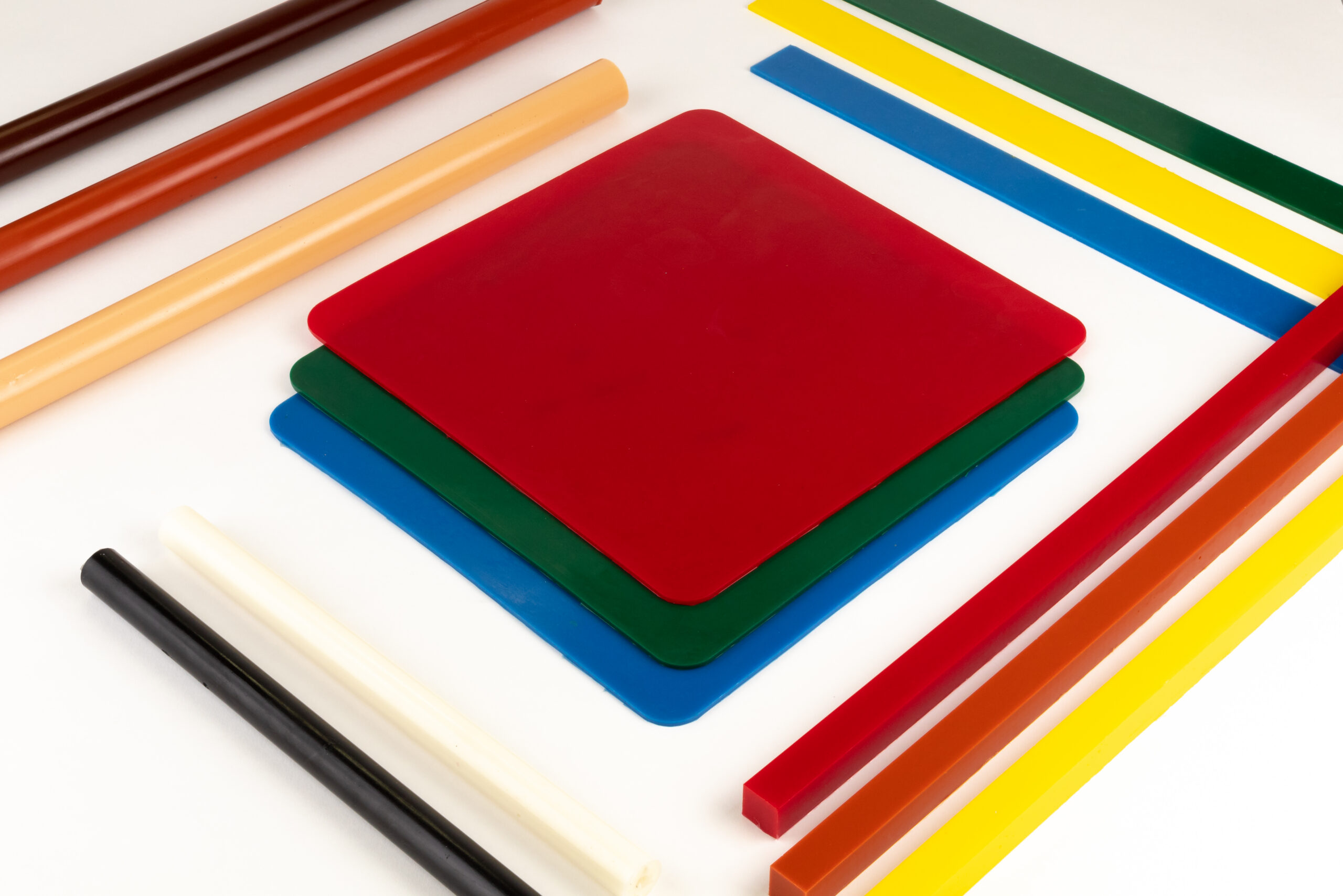
Abrasion-Resistant, Conductive Wear Parts, Rollers & Chute Liners
Corn, wheat and soybeans are highly abrasive, so cast polyurethane parts, rollers and chute liners can outlast the steel and plastic usually fitted there, which can minimize costly replacement and unwanted downtime. Where static is a concern, MPC’s patented metal salts technology makes the same parts conductive (roughly 10⁵–10¹¹ Ωcm) without shedding carbon into product as the surface wears.
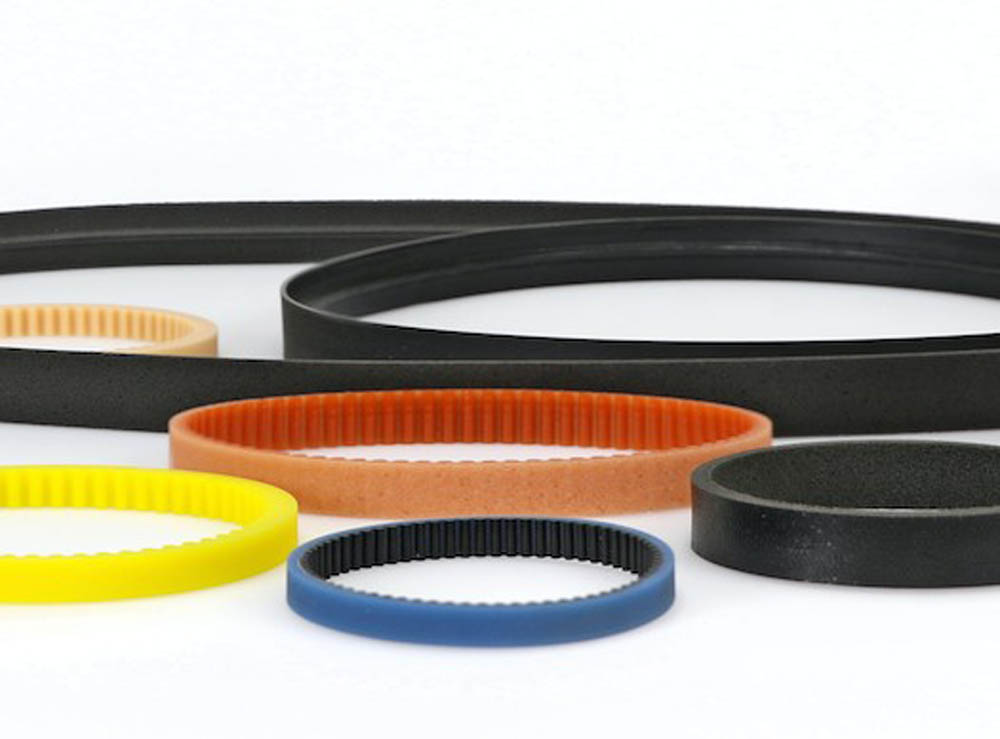
Custom Cleats & Belt Profiles
Sticky or fragile extruded product on an incline needs a cleat profile shaped for it. MPC manufactures cleats in any profile — including cleats that mount to your own belt — at a durometer that grips without marking or crushing. Our custom components are designed to meet the exact requirements of your application, including pigmented and detectable options for regulatory compliance programs.

Talk it through with a polyurethane expert who’ll tell you what’s achievable and what is not.
— Technical Specifications
The specs that matter for dry & extruded foods
Property
Range for this application
Volume resistivity (Durethane® C)
• Conductive range ≈ 10⁵–10¹¹ Ω-cm
• Typical at ambient, by durometer: 5×10⁵ (10A–55A) · 5×10⁶ (65A–75A) · 5×10⁷ (85A) · 5×10⁸ (90A–60D) · 5×10⁹ (70D)
• Customizable between these values
Mechanical properties (Durethane® C)
• Hardness Shore 20A–70D
• Tensile strength 250–7,000 PSI
• Tear strength, Die C 50–400 PLI
• Elongation 160–850%
• Compression set 5–40%
Hardness (ASTM D2240)
• Shore 20A–70D — solid polyurethane
• Shore 25A–50A — foam polyurethane
• Customized per part
Tensile strength (ASTM D412)
• 250–7,800 PSI — solid polyurethane
• 800–1,400 PSI — foam polyurethane
Tear strength, Die C (ASTM D624)
• 30–800 PLI — solid polyurethane
• 100–160 PLI — foam polyurethane
Compression set (ASTM D395B)
• 5–40% — solid polyurethane
• 17–20% — polycarbonate polyurethane at Shore 70A–90A
Abrasion and surface finish
• High abrasion resistance with tolerance to tight surface finishes
Food contact
• FDA-compliant formulations available in solid and foam polyurethane
Customizable properties
• Hardness, elongation, tensile, tear and compression set are formulated to the part
• Any shape component, or machined to precise specifications
• Color and detectable additives can be added
Relevant technical downloads
Document
What it gives the engineer
Conductive grade table and the full volume resistivity span for ESD-controlled rollers, pins and handling parts.
Why metal-salt conductivity is uniform and stays stable as the part wears, with resistivity by durometer, temperature and humidity.
Full solid-grade table: hardness 20A–70D with tensile, elongation, tear and compression set per grade.
General chemical resistance guideline by substance, with the conditions the guideline assumes.
— HOW TO WORK WITH US
From concept to scaled production
Connect With Us
Share your application, performance needs, or a part you want to improve.
Collaborate on Design
Our engineers will help optimize materials and geometry for manufacturability.
Prototype & Refine
We produce samples using our proprietary polyurethane formulations for testing.
Move to Production
Once approved, we move to scalable molding with full quality assurance.
That’s exactly the conversation we like to have – get a polyurethane expert on a quick call to pressure-test your idea before you commit.
— PROOF
White papers
White Papers
Conductive Polyurethane: Technology Overview
Not all conductive plastics are equal. This white paper explains why MPC’s metal-salt conductive polyurethane stays stable as the part wears and doesn’t shed like heavily carbon-loaded materials.
Engineering Polyurethane Components for Heavy-Duty Applications
Modern automation pushes mechanical parts past what standard materials can handle. This white paper covers the material, process, and design choices behind heavy-duty polyurethane components for robotics and precision systems, so they hold up under continuous operation.
Engineering Urethane Wheels and Rollers for Robotics and Automation
Wheels and rollers are among the hardest-working parts in any automated system. This white paper walks engineers through designing them for load, wear, traction, and reliability in heavy-duty robotics, so they last instead of becoming the weak link.
— Design Guide
How to specify urethane for dry and extruded food processing
What to consider, what’s possible, and where custom urethane outperforms other material options – drawn from the same expertise MPC brings to your application.
— FAQ
Frequently Asked Questions
What material dissipates static in grain, sugar, flour, spice or powder handling?
A conductive polyurethane. MPC’s patented metal-salt technology gives components a volume resistivity range of roughly 10⁵ to 10¹¹ Ωcm, so they carry charge out of a system — unlike non-conductive plastics.
What resists abrasion better than steel, plastic or rubber for dry abrasive food products?
Cast polyurethane. Grains such as corn, wheat and soybeans are highly abrasive, and urethane wear parts, rollers and chute liners hold up longer than the steel and plastic usually fitted at conveyors, chutes and transfer points.
What belt or cleat handles sticky or fragile extruded products without marking or crushing?
A cleat manufactured to your exact specifications. MPC manufactures cleats in whatever profile the application needs — including cleats that mount to your own belt or housing — at a durometer that grips without marking or crushing.
Are food-grade, FDA-compliant formulations available for dry-food contact?
Yes. FDA-compliant formulations are available, formulated to meet FDA guidelines for food contact. Compliance is determined for your system rather than granted to a material, so MPC supplies the formulation and documentation your qualification needs.
Can wear components be blue-pigmented or detectable for regulatory foreign-object programs?
Yes. Parts can be pigmented and detectable additives can be added. What actually reads depends on your inspection equipment, so bring that system into the conversation early and MPC will consider it when developing your product..
— Keep Exploring