Abrasive slurry and dry-bulk material wear pipe out fast, and even steel pipe needs frequent replacement
Corrosion
Steel corrodes, and coated or lined steel fails at the lining
Static
Non-conductive materials build static, and where combustible dust is present a static discharge can present a safety hazard
Brittleness
Composites can be brittle and crack under impact and vibration
Leaks
Jointed and lined systems leak at the seams and joints
Downtime
Replacing worn pipe means downtime for costly repairs
— The Differentiator
Where other pipes fall short
Most engineers start with steel pipe, HDPE pipe, rubber-lined steel, or composite pipe. Each one falls short:
Steel wears and corrodes under abrasive, wet or chemical service
HDPE is non-conductive, so it builds static where combustible dust is present, and it still wears under abrasion
Rubber-lined steel can fail at the lining bond
Composites can be brittle and crack under impact and vibration
Jointed systems can leak at the seams, and frequent replacement drives downtime
— How MPC Helps
What makes Durastatic® different
A proven polyurethane pipe that beats steel, HDPE and fiberglass
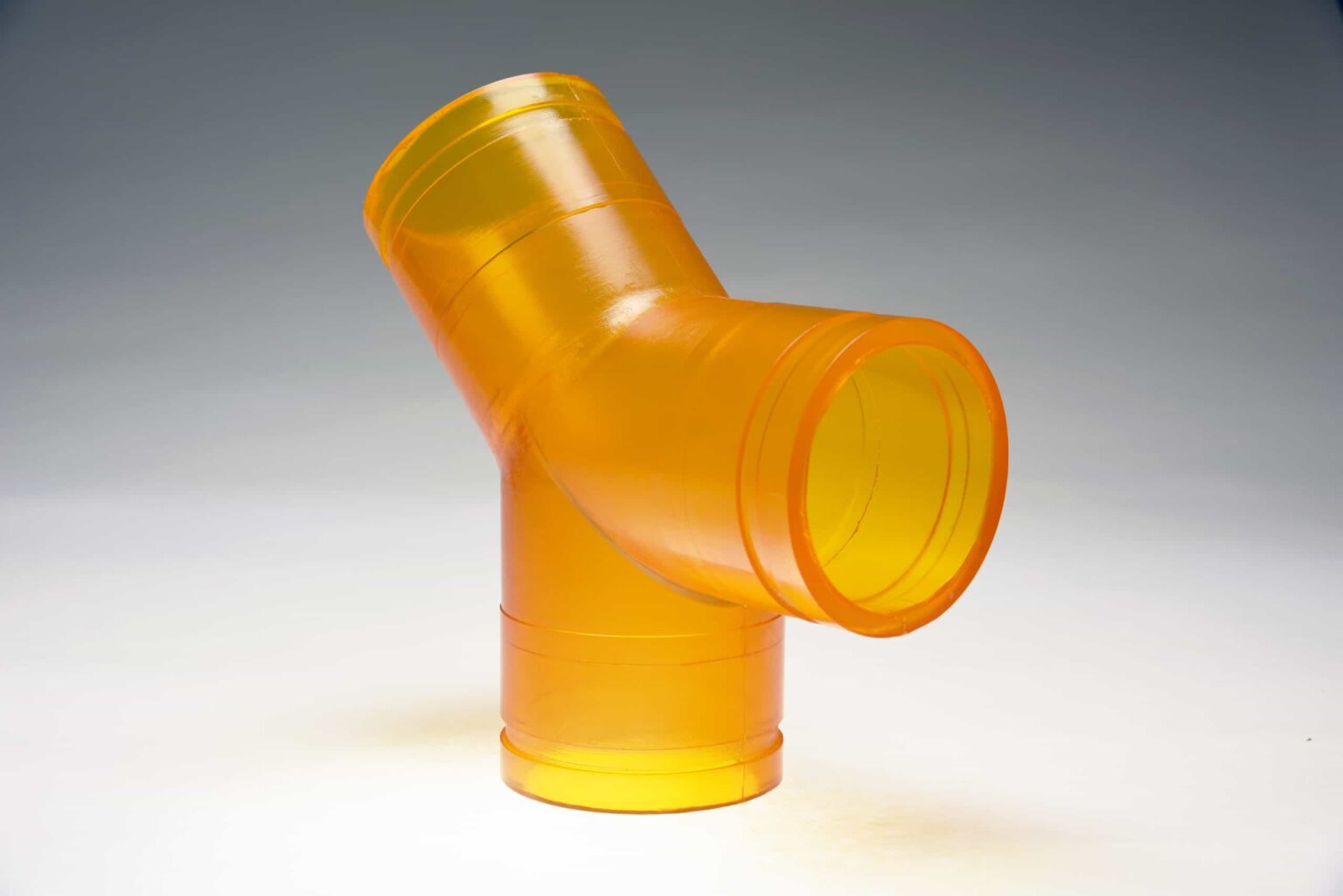
Durastatic® Pipe is MPC’s standard static-dissipative low-pressure polyurethane pipe, a proven product line for abrasive and dry-bulk transport. It is made from conductive polyurethane and built to standard schedule 80 sizes, so it can be added to existing systems.
• Abrasion: abrasion resistance far beyond steel and HDPE, for dramatically longer service life on slurry and dry-bulk lines • Corrosion and seams: corrosion-resistant and seamless, with smooth internal surfaces that reduce buildup and remove the joint leaks of lined and jointed systems • Static control: static-dissipative by design; the polyurethane is electrically conductive, so installed and grounded correctly it can help carry unwanted electrostatic discharge safely to ground and limit static-ignition risk where combustible dust is present. • Weight: lightweight versus steel, so it is easier and faster to install and handle • Compatibility: standard schedule 80 sizes make it interchangeable with existing steel, plastic and HDPE fittings, so a Durastatic section or elbow fits the system you already have
Have an application in mind?
Talk it through with a polyurethane expert who’ll tell you what’s achievable and what is not.
Durastatic® Pipe Cuts Maintenance in an Incinerator Ash Slurry System
A waste treatment facility was replacing steel elbows in its abrasive incinerator-ash slurry lines after only a few months of service. This case study shows how Durastatic® pipe ran several years with no wear-related replacement, and installed 67% faster than the metal pipe it replaced.
THE PROBLEM
Glass-like incinerator ash was wearing out steel elbows and fittings in the slurry lines, forcing replacement every few months.
WHAT MPC DID
Both slurry lines were replaced with standard Durastatic® solid polyurethane pipe.
Years in service with no pipe or fitting replaced for wear
67%
Faster to install than metal pipe, at roughly 85% lighter
— Technical Specifications
The specs that matter
Property
Range for this solution
Pipe sizes
• 4, 6, and 8 in nominal • Wall thickness 0.22–0.69 in • Standard length 120 in plain end; 122–123 in flanged end (4–10 in sizes)
Pipe weight
• 8.5–135 lb per 120 in section, plain end • 25–107 lb per section, flanged end • Roughly 85% lighter than steel
Operating pressure
• 50 PSI maximum continuous • Rating applies when assembled with bonded Durastatic® flanges and couplings and approved adhesives
Operating temperature
• 150°F / 66°C maximum continuous • Bell brittle point –80°F / –63°C
Physical properties
• Durometer 93 Shore A • Tensile strength 6,000 PSI • 100% modulus 1,600 PSI • Elongation 400% • Tear strength, Die C 550 PLI; D470 split tear 100 PLI • Resiliency, Bashore 41%
Coefficient of thermal expansion
• 1.35 × 10⁻⁴ in/in/°F from –32°F to +32°F • 0.95 × 10⁻⁴ in/in/°F from +32°F to +75°F • 0.90 × 10⁻⁴ in/in/°F from +75°F to +120°F
Fittings
• 22.5°, 45°, 60°, 90° and 90° long elbows; tees; 45° wyes; 45° laterals • Dimensions and weights published per size • Interchangeable with standard schedule 80 steel, plastic and HDPE fittings
Static dissipation
• Static-dissipative by design — the pipe wall is electrically conductive, so a correctly installed and grounded system carries charge to ground
Chemical resistance
• Published rating by substance across roughly 120 chemicals, fuels and oils • See the design and installation guide for the substance-by-substance table
Relevant technical downloads
Document
What it gives the engineer
Conductive Polyurethane: Technology Overview
In-depth overview of MPC’s patented metal salts technology, which provides stable volume resistivity as the part wears.
Durastatic® Dimensions
Standard pipe sizes and dimensional specifications.
Durastatic® Price List
Current standard pipe pricing.
Durastatic® Design & Installation Guide
Fittings, joining and installation guidance for a standard Durastatic system.
— Industry highlights
Where this product works
Durastatic® Pipe moves abrasive and dry-bulk material anywhere steel wears and corrodes and non-conductive pipe builds static. These are common examples from a wide range of industries:
Industry
The application
Industrial / Mining & Aggregate
Abrasive slurry and dry-bulk transport where steel wears and corrodes.
Durastatic® Pipe Displays Superior Wear Life in a Limestone Slurry Scrubber
A power generation facility running an SO2 scrubber was replacing worn steel limestone-slurry piping as often as every three months, with the scrubber down eight hours or more each time. This case study shows how Durastatic® pipe ran more than two years with very little sign of wear, at roughly 22 lb per 10-foot section against 150 lb for steel.
Not all conductive plastics are equal. This white paper explains why MPC’s metal-salt conductive polyurethane stays stable as the part wears and doesn’t shed like heavily carbon-loaded materials.
What pipe outlasts steel and HDPE on abrasive slurry or dry-bulk lines?
Durastatic® Pipe, MPC’s static-dissipative polyurethane pipe. Its abrasion resistance is far beyond steel and HDPE, and it is corrosion-resistant and seamless, so it keeps carrying abrasive material where steel wears and corrodes and lined systems leak.
How does static-dissipative pipe help with static where combustible dust is present?
The polyurethane is electrically conductive, so installed and grounded correctly it can help carry electrostatic discharge safely to ground and limit static-ignition risk.
What standard sizes does Durastatic come in, and how do I spec it?
Durastatic comes in standard schedule 80 sizes. Spec it from the dimension sheet and price it from the current price list, both linked above. Because schedule 80 is standardized, a Durastatic section or elbow fits your existing steel, plastic or HDPE fittings.
How does Durastatic install compared to steel or lined pipe?
Durastatic is lightweight versus steel, so it is easier and faster to handle and install, and it is seamless, so there are fewer joints to leak. Design and installation guides cover fittings, joining and support.
Is Durastatic corrosion-resistant and seamless, with no joint leaks?
Yes. It is corrosion-resistant polyurethane with a smooth, seamless internal surface that reduces buildup and removes the joint leaks of lined and jointed systems.