
Fruit & Vegetable Processing — Wash, Sort & Grade Lines
Contact pressure, wash-line water and produce acids defeat standard parts. Custom-engineered polyurethane components don’t.
— The Recurring Problems
Bruising and crushing
Standard 60A+ plastic and rubber wheels press too hard on soft fruit
Grip without damage
Fragile produce on inclines must be held without crushing or marking
Fixed geometry
Modular belting cannot provide the custom cleats, fingers and profiles needed
Wet-line chemistry
Wash water, produce acids and sugars attack standard materials
Food contact
Every contact surface must use a food-safe materials
Foreign-object control
Regulatory programs may require detectable parts
Appearance grading
No marks or contamination can transfer to produce
— The Differentiator
Where standard wheels and belting fall short
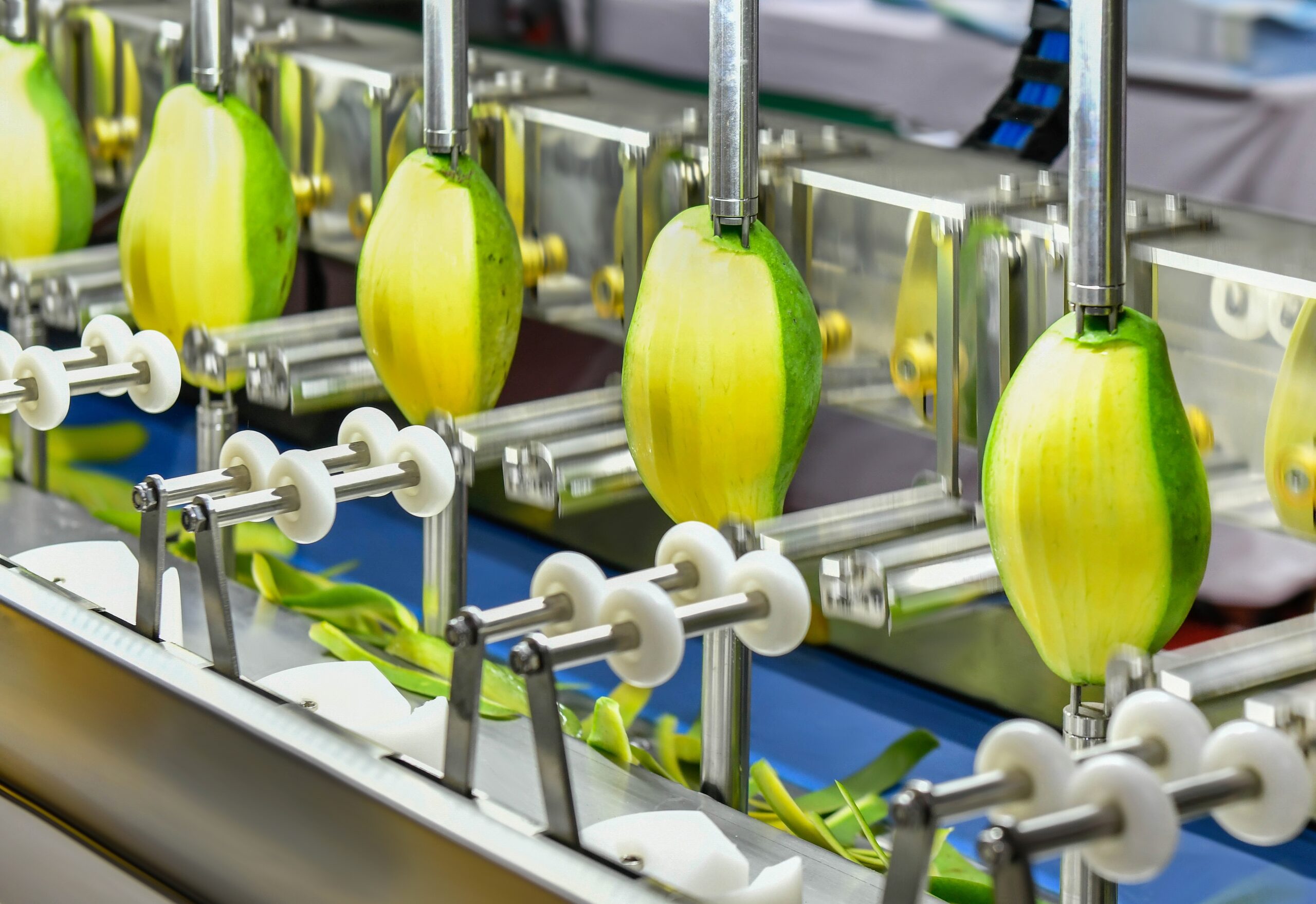
Engineers reach for standard injection-molded plastic or rubber wheels, or catalog food belting — and each falls short on fragile produce:
- High-durometer plastic and rubber wheels apply too much pressure, bruising or cracking product
- Standard belting can't handle fragile produce on inclines or provide custom grippers and fingers
- Rubber and plastic cleats lose grip and tear at high cycle rates
- None can be customized to the combination of durometer, geometry and grip gentle handling needs, and stock suppliers offer no engineering support
- Wet wash-line service degrades materials that weren't formulated for it
The Result – Bruised or cracked produce rejected plus rework, grip and marking problems, and compliance exposure. On fragile product, damage shows up immediately.
— Solution Spotlights
The custom parts that solve it
No-Crush Wheels & Rollers
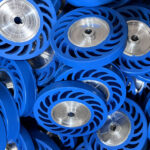
A no-crush wheel is as much geometry as material — past a set load, it flexes instead of pushing back, spreading gentle pressure across fragile product. Because there is no formula for how soft it should be, MPC can partner with your engineering team to identify the right material and geometry that best fit your application . Cast polyurethane is also non-marking on produce graded on appearance.
Custom Cleats, Grippers & Fingers
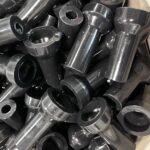
Fragile produce on an incline or conveyor needs a profile shaped for it. MPC manufactures custom cleats, grippers and fingers at a durometer that grips without crushing or marking, and customizes the material to the wet, UV or temperature environment your part lives in. Our custom components are designed to meet the exact requirements of your application, including FDA-compliant formulations for food contact.

Talk it through with a polyurethane expert who’ll tell you what’s achievable and what is not.
— Technical Specifications
The specs that matter for fruit & vegetable processing
Property
Range for this application
Hardness (ASTM D2240)
• Shore 20A–70D — solid polyurethane
• Shore 25A–50A — foam polyurethane
• Customized per part
Tensile strength (ASTM D412)
• 250–7,800 PSI — solid polyurethane
• 800–1,400 PSI — foam polyurethane
Elongation (ASTM D412)
• 160–850% — solid polyurethane
• 330–700% — foam polyurethane
Tear strength, Die C (ASTM D624)
• 30–800 PLI — solid polyurethane
• 100–160 PLI — foam polyurethane
Compression set (ASTM D395B)
• 5–40% — solid polyurethane
• 17–20% — polycarbonate polyurethane at Shore 70A–90A
Chemical exposure
• Thermoset polyurethane resists a wide range of chemicals and oils
• Resistance depends on the specific polyurethane chemistry, operating temperature, aeration and length of exposure
Food contact
• FDA-compliant formulations available in solid and foam polyurethane
Abrasion resistance and surface finish
• High abrasion resistance with tolerance to tight surface finishes
Customizable properties
• Hardness, elongation, tensile, tear and compression set are formulated to your specifications
• Color and detectable additives can be added
Relevant technical downloads
Document
What it gives the engineer
Full solid-grade table: hardness 20A–70D with tensile, elongation, tear and compression set per grade.
Foam grade table, plus the self-cleaning pore structure and integral-skin options.
The heat-, aging- and hydrolysis-resistant grades, and the lowest compression set in the family.
General chemical resistance guideline by substance, with the conditions the guideline assumes.
— HOW TO WORK WITH US
From concept to scaled production
Connect With Us
Share your application, performance needs, or a part you want to improve.
Collaborate on Design
Our engineers will help optimize materials and geometry for manufacturability.
Prototype & Refine
We produce samples using our proprietary polyurethane formulations for testing.
Move to Production
Once approved, we move to scalable molding with full quality assurance.
That’s exactly the conversation we like to have – get a polyurethane expert on a quick call to pressure-test your idea before you commit.
White papers
— PROOF
White Papers
Engineering Polyurethane Components for Heavy-Duty Applications
Modern automation pushes mechanical parts past what standard materials can handle. This white paper covers the material, process, and design choices behind heavy-duty polyurethane components for robotics and precision systems, so they hold up under continuous operation.
Engineering Urethane Wheels and Rollers for Robotics and Automation
Wheels and rollers are among the hardest-working parts in any automated system. This white paper walks engineers through designing them for load, wear, traction, and reliability in heavy-duty robotics, so they last instead of becoming the weak link.
Custom Polyurethane Formulations in Robotics
When off-the-shelf materials can’t hit every requirement at once, robotics engineers turn to custom formulation. This white paper explains how MPC customizes durometer, additives, and chemistry to resolve the competing demands of wear, stiffness, and environmental resistance in robotic systems.
— Design Guide
How to specify urethane for fragile produce
What to consider, what’s possible, and where custom urethane outperforms other material options – drawn from the same expertise MPC brings to your application.
— FAQ
Frequently Asked Questions
What wheel or roller material moves berries and soft fruit without bruising or cracking them?
A cast polyurethane no-crush wheel. The wheel’s geometry does much of the work — its spokes and voids flex past a set load so pressure spreads instead of concentrating — and MPC customizes the material to your product.
What is a "no-crush" wheel, and how does it prevent product damage?
It’s a wheel designed to stop pushing back. Past a certain load its spokes and voids bend inward rather than resisting, so contact pressure stays gentle. The number of voids, the spoke angles, the wall thickness, and material selection set how compliant it is.
What belt or gripper handles fragile produce on inclines without marking or crushing?
A cleat or gripper molded to the product. MPC manufactures them to your machine using custom materials that grip without crushing, and they hold that grip longer than rubber or plastic cleats, which tear at high cycle rates.
Are food-grade, FDA-compliant formulations available for produce contact?
Yes. FDA-compliant formulations are available, formulated to meet FDA guidelines for food contact. Compliance is determined for your system rather than granted to a material, so MPC supplies the formulation and documentation your qualification needs.
Can components be blue-pigmented or include detectable addititives to meet regulatory requirements?
Yes. Parts can be pigmented and detectable additives can be added. What actually reads depends on your inspection equipment, so bring that system into the conversation early and MPC will consider it when developing your product.
— Keep Exploring