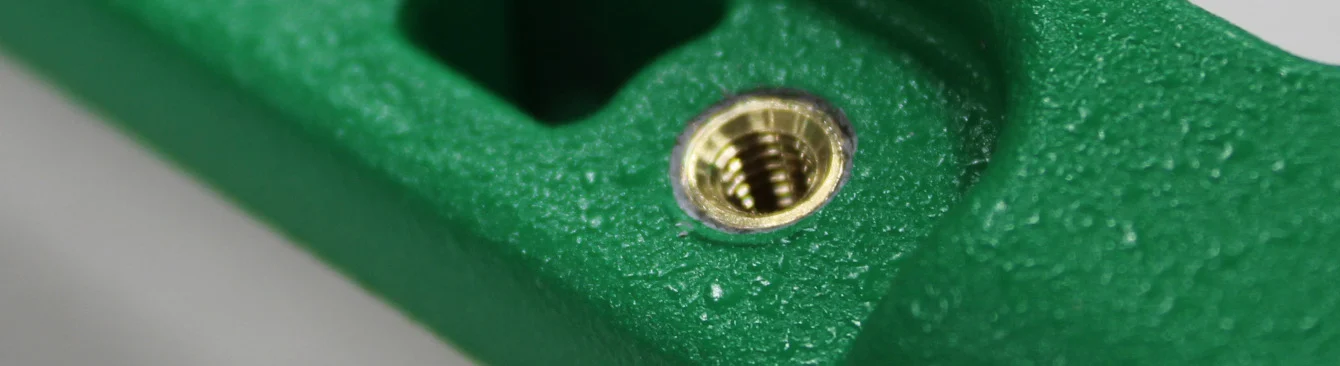
Insert molding is a crucial manufacturing technique that enhances the fit and functionality of your products. By encapsulating various materials – such as metals and plastics – with polyurethanes, can help achieve superior strength and simplify assembly.
What is Insert Molding?
Insert molding is a skilled manufacturing process where liquid materials, such as thermoset polyurethanes, are layered over one or more subcomponents to create robust, integrated products. This technique is often specified for applications requiring improved functional and mechanical properties, offering an unbreakable bond compared to traditional assembly methods.
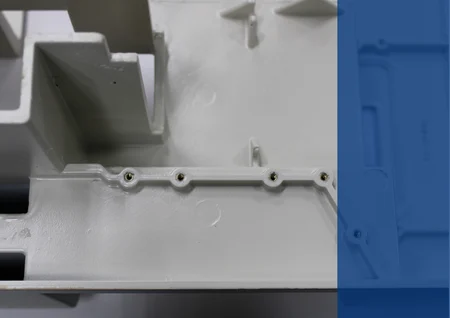
Why Choose Insert Molding?
- Enhanced Mechanical Properties: Superior durability and resilience
- Material Compatibility: Ability to combine different materials for specific design needs
- Streamlined Production: Reduces assembly time and costs
Whether you’re developing components for medical devices, robotics, or other applications, insert molding offers limitless design options without sacrificing performance.
How are Inserts Molded into Parts
- Chemical Bond: A natural bond forms with compatible materials, such as thermosets combined with thermosets or specific thermoplastics.
- Adhesive Bonding: For materials that are not compatible, such as injection molded ABS or Elastomeric RIM, adhesives are required to ensure a strong bond.
- Mechanical Interlock: Utilizing design features like undercuts, thru-holes, and knurling allows for a natural grip during the curing process without adhesive.
When to Use Inserts in Your Product Design
Insert molding is a common technique utilized in various applications from food processing, military & defense to medical devices – you name it! Inserts come in different shapes and sizes, and forms like shafts, bushings, sleeves, hubs, and filters. While molded inserts commonly act as connectors to other components, certain inserts can also reduce part weight & size and/or increase part stiffness. For this reason, applications such as robotics often benefit from molded inserts to extend wear life.
At MPC, we offer insert molding through our cast process with advanced thermoset polyurethanes, ensuring optimal results without sacrificing performance.